
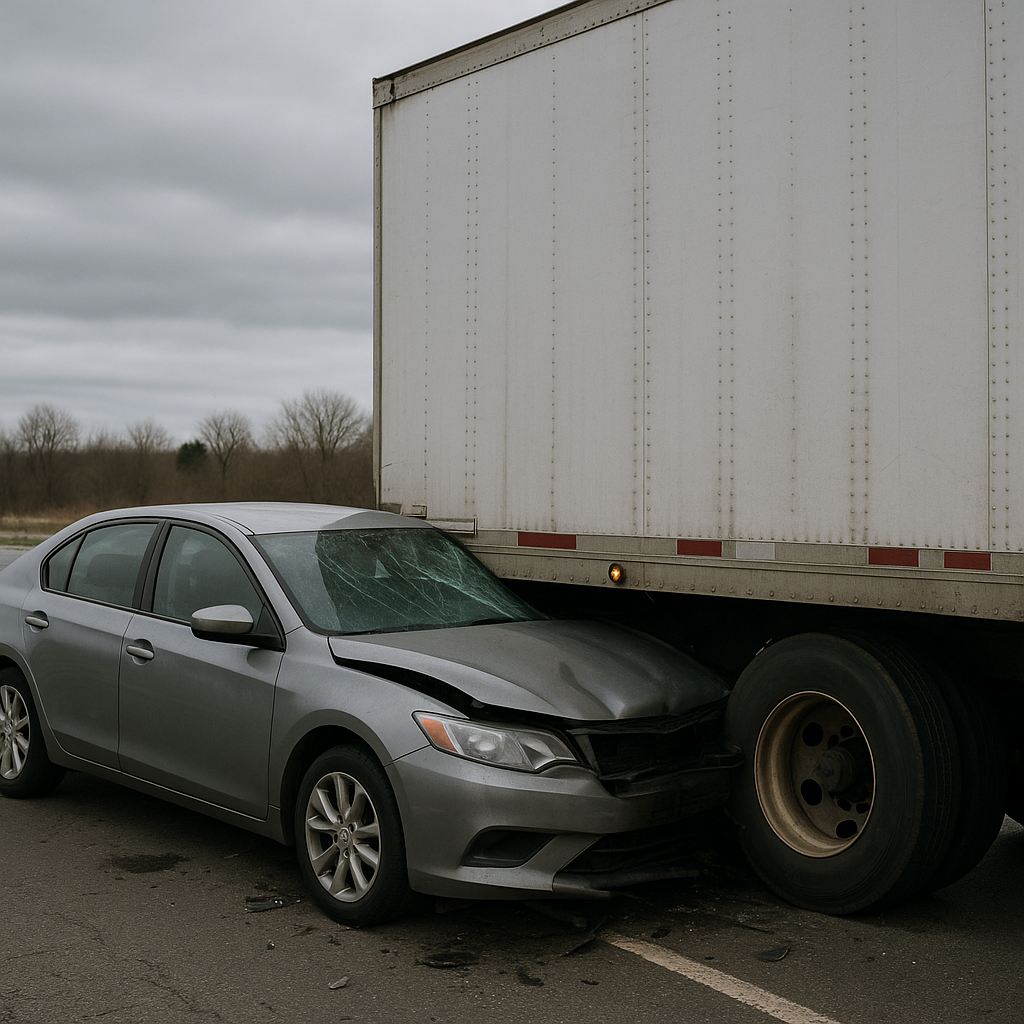
Underride Accident Involving Low Trailer Visibility
An underride accident occurs when a smaller vehicle collides with and slides beneath the side or rear of a large truck or trailer. These incidents are especially concerning when the trailer is poorly visible, often due to dim lighting, faded reflectors, or inadequate signage. Low trailer visibility increases the risk drivers may not recognize the trailer’s presence until it is too late to avoid a collision.
Poor weather, nighttime driving, and insufficient roadway lighting can further obscure the outline of a trailer, leading to situations where even attentive drivers may not see the obstacle in time. These accidents can result in significant damage and, in some cases, severe injury.
How Underride Accidents with Low Trailer Visibility Unfold
When Vehicle and Trailer Paths Cross
Underride accidents often happen when a car approaches a trailer that does not stand out clearly against the surrounding environment. Reduced trailer visibility can stem from missing or faded reflective tape, broken side lamps, dark paint, or a buildup of dirt and grime obscuring markings.
A typical situation might involve a car traveling at night along a poorly lit road. If it encounters a truck making a wide turn or reversing slowly, and the trailer lacks sufficient visibility markers, the driver may not immediately recognize the hazard ahead.
Sudden Realization and Limited Reaction Time
Drivers may only notice the trailer at the last moment. This limited reaction window reduces the chance to successfully brake or steer away. The car’s front end may slide under the higher chassis of the trailer, while standard crash safety features like airbags and crumple zones are less effective in these scenarios due to the height mismatch.
Assessing Common Aftereffects
Damage to Vehicles and Trailers
The structure of most trailers is higher than the hood of typical sedans or small SUVs. As a result, an underride event can cause substantial damage to the passenger vehicle’s roof, windshield, and front pillars. The trailer itself may sustain structural damage where the impact occurred, sometimes requiring inspection and repair before returning to service.
Disruption to Traffic Flow
When underride accidents occur, roads may be blocked by debris or disabled vehicles. This often leads to temporary lane closures as emergency services respond and clear the scene. Traffic may be redirected or delayed, depending on the severity of the incident.
Emergency Response and Investigation
First responders check for injuries and ensure the safety of those involved. Investigations often focus on the conditions at the time—such as weather, lighting, and the trailer’s visibility features—to understand how the collision developed.
Safety Questions That Often Arise
Wondering About Trailer Markings
Curiosity often turns to the effectiveness of visibility features, including reflective tape and side lamps. People may ask whether the trailer had proper visibility aids or if any of them were malfunctioning or in need of maintenance.
Consideration of Road and Weather Conditions
Questions sometimes extend to whether environmental factors, like rain or fog, made the trailer less discernible. Observers may also discuss whether the accident happened in a location known for lighting challenges or frequent traffic.
Awareness of Preventive Technology
Some individuals inquire about the use of underride guards or additional lighting systems designed to prevent these kinds of accidents. Ongoing improvements in both trailer design and roadway safety features are points of interest.
Looking Ahead to Safer Roadways
Exploring the events and outcomes of a low trailer visibility underride accident brings attention to the many factors involved in roadway safety. While these incidents are complex, understanding how environments, vehicle design, and visibility features interact may assist in reducing future risks. Improvements in trailer maintenance, reflective materials, and lighting technology continue to play roles in helping drivers identify and avoid potential hazards on the road.