
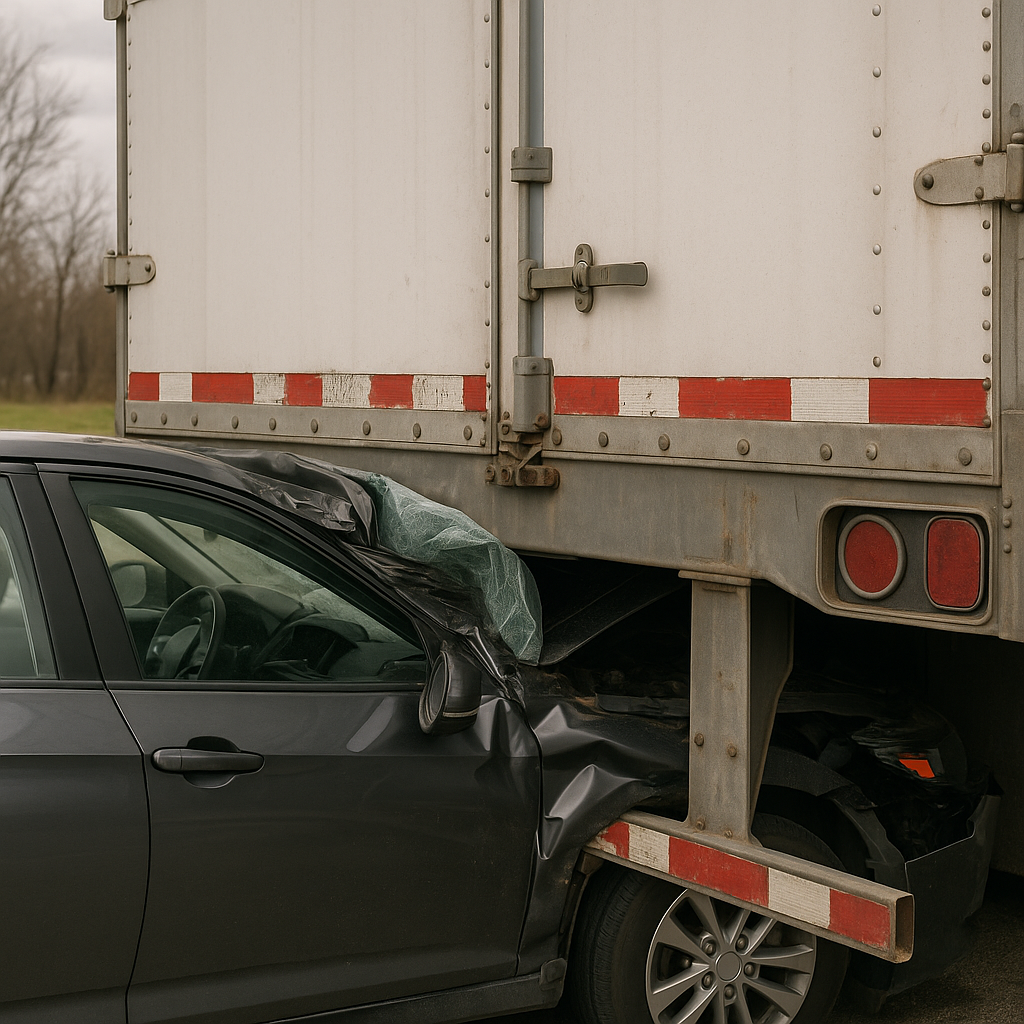
Underride Accident Involving Reflective Tape Failure
Underride accidents are collisions where a vehicle, often a passenger car, slides beneath the side or rear of a larger truck or trailer. These events can result in severe consequences, particularly when vehicle safety features fail to prevent or reduce the impact. One significant safety measure is the application of reflective tape on trailers and trucks, which is intended to increase visibility during low-light conditions. When this reflective tape fails, the likelihood of an underride accident can increase.
In this article, the focus will be on how a reflective tape malfunction may contribute to an underride incident, what may typically unfold in such a situation, and what questions people usually consider afterward.
How Reflective Tape is Meant to Prevent Underride Accidents
The Purpose of Reflective Tape on Trucks and Trailers
Reflective tape is designed to make large vehicles more visible at night or in poor weather conditions. When lights from other vehicles shine onto the tape, it reflects light back, outlining the shape and size of the truck or trailer. This helps approaching drivers recognize and judge the distance to the vehicle in time to adjust their speed or path.
Consequences When Reflective Tape Fails
If the reflective tape is missing, damaged, or has lost its reflectivity due to age or improper maintenance, the vehicle can become significantly less visible. Drivers in passenger vehicles may not see the truck or trailer until they are extremely close, reducing their time to react. This can result in situations where a car slides beneath the larger vehicle, commonly referred to as an underride accident.
What Commonly Happens During a Reflective Tape Underride Scenario
Conditions Leading to Reduced Visibility
Reflective tape underride incidents often occur at night, during rain, or in fog, when visibility is already limited. If a stationary or slow-moving trailer on the roadway does not have functioning reflective tape, drivers may fail to perceive its presence in time to avoid a collision.
Impact on Vehicle Safety Systems
Modern cars are equipped with headlights and sometimes automatic emergency braking, but these systems rely partly on visual cues. A trailer without reflective marking may not trigger these systems adequately, further raising the risk of underride.
Typical Outcomes After the Accident
Damage to Vehicles
When a car strikes and slides under a trailer, the car’s upper compartment—such as the windshield and roof—can absorb much of the impact. This can result in substantial damage to the vehicle’s structure. The truck or trailer may also sustain damage, particularly to the underride guard or frame.
Physical Aftermath for Involved Road Users
In these scenarios, vehicle occupants may be vulnerable to injury due to the way cars are designed to absorb energy in frontal collisions, not in situations where an object intrudes from above or the side. Immediate safety responses typically involve emergency responders attending the scene to address these risks.
Considerations After an Underride Accident
Common Safety Questions
People often wonder how reflective tape can fail and whether maintenance routines might prevent such occurrences. Factors like weather exposure, improper application, or infrequent inspection may all contribute to reduced reflectivity over time.
Potential Changes in Inspection and Maintenance Practices
Some individuals may inquire about industry standards regarding reflective tape and whether improved inspection protocols or different materials could enhance visibility. Concerns sometimes extend to questions about the effectiveness of underride guards as a backup measure.
##### Broader Awareness About Roadway Visibility
Awareness campaigns and evolving regulations periodically address the importance of reflective materials for large vehicles. Discussions sometimes center on how both drivers and operators can remain vigilant in low-light situations.
Ongoing Focus on Improving Roadway Safety
Reflective tape is a key component of visibility for large vehicles and plays a significant role in preventing underride accidents. When it fails, the risk of severe outcomes grows. Ongoing attention to proper installation, regular inspection, and timely replacement of reflective tape helps maintain safer roads for all users. As awareness increases, continued improvements in technology and maintenance standards are likely to further reduce the frequency and severity of underride accidents involving reflective tape failure.