
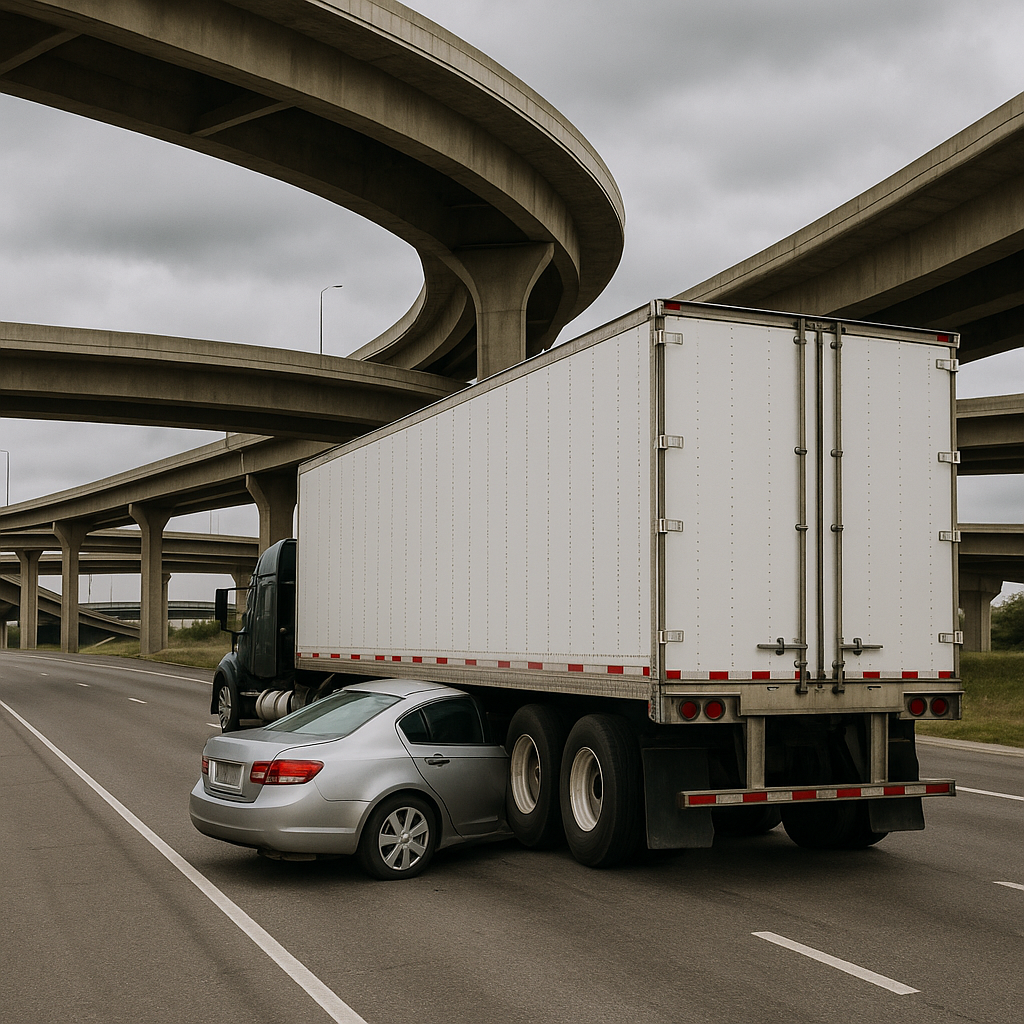
Underride Collision at Freeway Interchange
An underride collision at a freeway interchange involves a smaller vehicle sliding underneath the rear or side of a large truck or trailer. These incidents are often sudden and unexpected, occurring where high speeds, merging traffic, and complex road layouts meet. At interchanges, rapid lane changes and traffic congestion can increase the risk of this type of crash.
Many people encounter news of underride collisions with concern, as these accidents can lead to serious consequences. Understanding the elements involved and what typically follows such an event can provide much-needed context.
How Underride Collisions Occur at Interchanges
Traffic Patterns Contributing to Risk
Freeway interchanges are busy nodal points where vehicles merge, exit, or change lanes in quick succession. In these locations, large trucks may decelerate, stop, or maneuver in ways that disrupt the flow of traffic. A smaller passenger vehicle traveling behind or beside a truck may have limited time to react, especially if visibility is reduced by weather, lighting, or the truck itself.
When a following vehicle fails to slow down or swerve in time, it may slide underneath the truck’s trailer. This is termed an “underride” because the front of the smaller vehicle goes beneath the taller structure of the trailer, often with substantial force.
Factors That Influence Underride Incidents
Road surface conditions, traffic speed, and the design of vehicle underride guards all contribute to the likelihood and severity of a freeway interchange underride. Interchanges with sharp ramps or abrupt merges can further elevate risk.
Common Outcomes After an Underride Collision
Immediate Physical Effects
An underride collision typically results in significant damage to the smaller vehicle, as the upper portion may be severely impacted by the trailer’s underside. Emergency responders are often required due to the potential for occupants to be trapped.
Traffic and Logistical Disruptions
A crash at an interchange can quickly affect surrounding traffic. Emergency services, clearing crews, and law enforcement may need to close lanes or redirect vehicles, sometimes leading to major delays on connecting highways.
Additional Practical Consequences
Towing and clearing the vehicles from the scene present logistical challenges, particularly in elevated or multi-level interchange settings. Depending on the extent of the crash, infrastructure such as guardrails or signage may also be damaged and require repair.
Questions and Concerns Following an Underride Accident
Vehicle and Highway Safety Considerations
After an underride collision, the effectiveness of existing safety features and infrastructure is often examined. People may wonder about the role of underride guards, visibility measures, and traffic control mechanisms at interchange sites.
Ongoing Discussions on Prevention
Discussions among transportation experts frequently focus on how to reduce underride risks further. This might include engineering improvements, updated vehicle standards, or changes in road design, especially at complex interchanges.
Immediate Steps at the Scene
Concerns in the aftermath often center on the safety and well-being of those involved and the handling of the incident by emergency services. Questions may also arise about how long traffic delays will last and when regular interchange operations will resume.
Moving Forward: Understanding Freeway Interchange Underride Events
Examining freeway interchange underride incidents reveals the interplay between vehicle design, driver awareness, and roadway configuration. While these collisions are relatively rare, their complexity and potential impacts underscore the importance of ongoing safety improvements and thoughtful interchange management. Through awareness and informed discussion, communities and transportation agencies continue to address the unique challenges of preventing and managing underride collisions at freeway interchanges.