
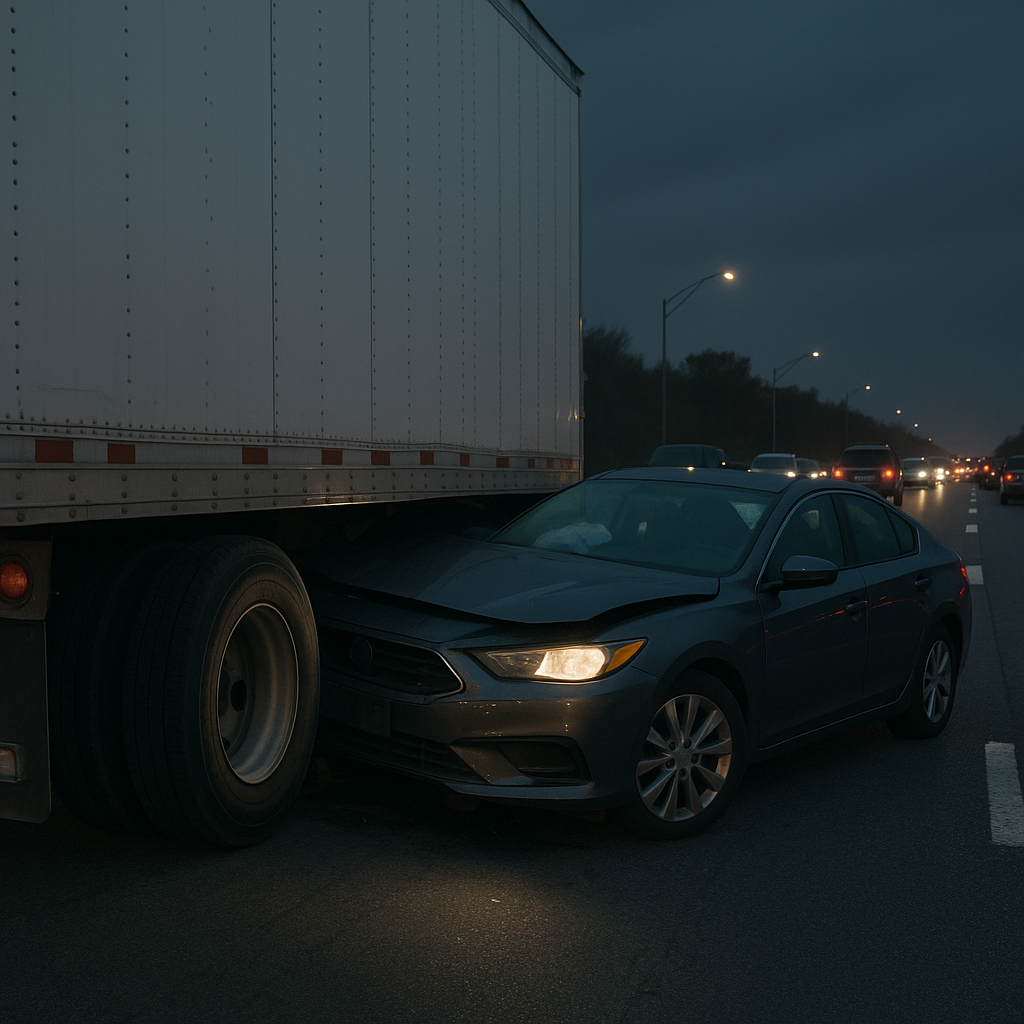
Underride Collision During Night Traffic Slowdown
Underride collisions can present complex risks, particularly during nighttime hours when visibility is reduced and traffic becomes unpredictable. These incidents often occur in situations involving sudden slowdowns or unexpected stops, increasing the potential for severe consequences.
A night slowdown underride frequently involves a smaller passenger vehicle making contact with the rear or side of a larger truck or trailer. Limited lighting, obstructed views, and rapid changes in traffic speed combine to make these events challenging for all road users involved.
What Typically Happens in a Night Slowdown Underride Event
Sequence of Events Leading to the Collision
During nighttime traffic, conditions can shift quickly due to roadwork, congestion, or changing speed limits. When a truck begins to slow down or stop, vehicles traveling behind may not realize the change in time. The reduced visibility at night, combined with factors like fatigue or glare, can delay driver reaction.
In many underride collisions, a passenger vehicle travels beneath the rear or side of a trailer. The critical difference at night is that even well-lit trucks may not provide enough warning to approaching cars. Tail lights, reflective tape, and underride guards are all designed to help—to varying degrees—but limitations still exist.
Immediate Aftermath and Response
After such a collision, nearby drivers frequently stop or proceed with caution, sometimes leading to brief traffic congestion. Emergency responders may arrive to assess the situation, secure the area, and manage any potential hazards, such as leaking fluids or damaged cargo. At night, the need for additional lighting and warning signals can further slow traffic flow.
Contributing Conditions
Night slowdown underride incidents occur more often on highways and busy urban routes. Factors such as poor road markings, insufficient signage, or temporary construction barriers can contribute. Inclement weather may reduce visibility further, while glare from headlights can complicate matters for following drivers.
Common Outcomes Observed Following an Underride Collision
Vehicle and Roadway Effects
Physical damage is usually most apparent to the smaller vehicle, which may sustain significant front-end impact beneath the trailer. Heavy trucks and trailers may suffer damage to underride guards, lighting systems, or cargo containment. Debris from the collision could create additional hazards for subsequent traffic.
Effects on Traffic Flow
An underride event during a night slowdown often leads to lane closures or diversions. Traffic authorities might implement temporary rerouting while crews work to clear the scene. Delays tend to persist beyond the initial response as the recovery of vehicles and debris takes place.
Immediate Practical Considerations
Other drivers approaching the area typically reduce speed out of caution. Visibility of the crash scene is sometimes limited, particularly in less-illuminated stretches. Emergency vehicles and first responders work to mitigate additional risks, clearing roadways as soon as possible to restore normal traffic conditions.
Questions and Concerns Following a Night Slowdown Underride
Safety Precautions for Future Driving
Many people wonder what actions can reduce the chance of similar incidents. Common questions address the effectiveness of truck lighting, the visibility of underride guards, and the placement of reflective markings. Drivers may also consider strategies for maintaining a safe following distance, especially at night.
How Infrastructure Can Play a Role
Discussions sometimes arise about how roadway design or signage influences night slowdown underride risks. Some roads incorporate improved lighting or electronic warnings to alert drivers in advance of slow traffic conditions. Others consider the impact of strict enforcement of speed limits or the use of rumble strips.
##### The Role of Vehicle Technology
Advancements such as automatic emergency braking and collision detection systems may also be considered. While these technologies are not a complete solution, they can provide an added layer of safety, particularly during low-visibility conditions.
Reflecting on Night Slowdown Underrides
Understanding the typical sequence, outcomes, and resulting questions after an underride collision during a night traffic slowdown helps drivers and safety professionals alike. An awareness of the conditions that contribute to these events supports efforts to improve safety, both through individual choices and collective infrastructure enhancements. Through continued attention to visibility, response protocols, and technology, the goal remains to reduce the frequency and severity of night slowdown underride incidents.