
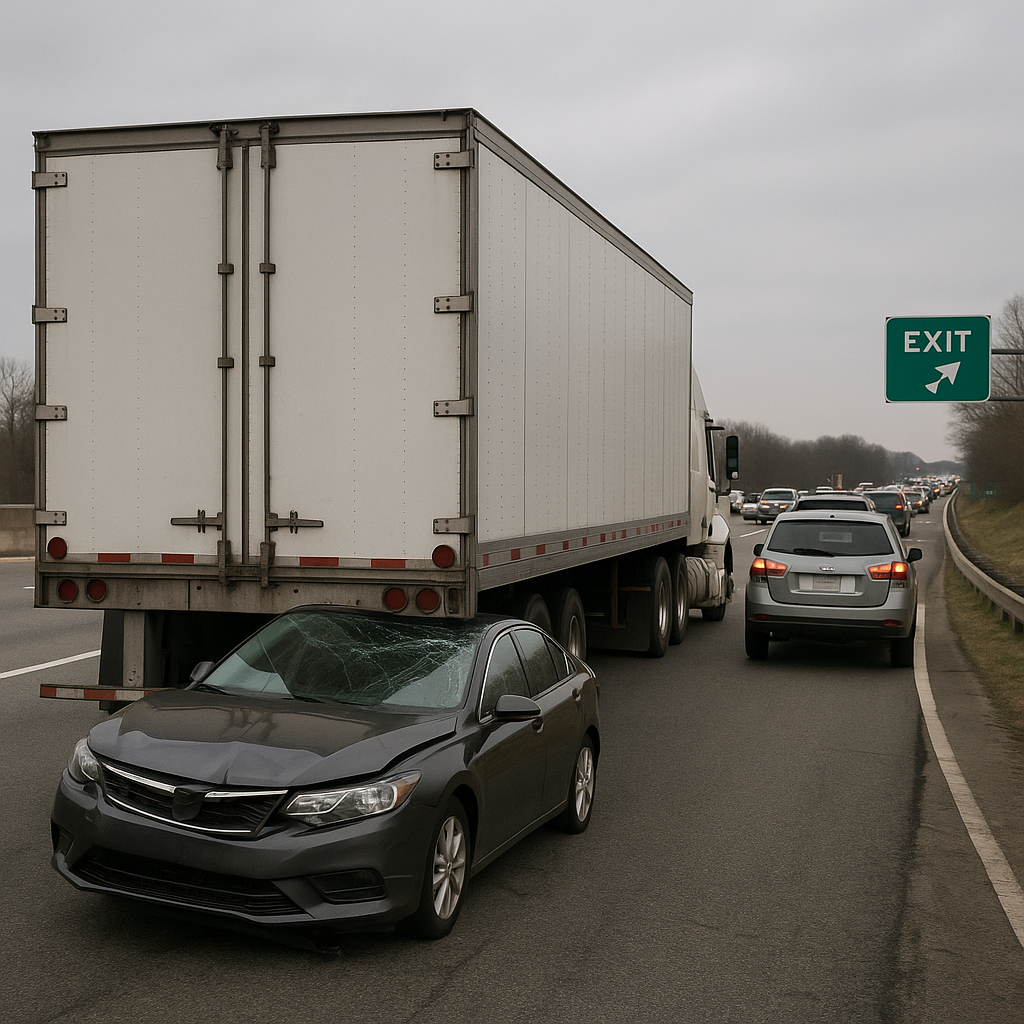
Underride Collision During Traffic Slowdown Near Exit
An underride collision during a traffic slowdown near an exit can be a complex and challenging situation for drivers and emergency responders. This type of accident happens when a smaller vehicle, like a car, slides beneath the rear or side of a larger vehicle such as a semi-truck or trailer. Traffic slowdowns near highway exits are common, increasing the possibility of such incidents.
Understanding the typical events of an exit slowdown underride can help individuals recognize the contributing factors, the immediate results, and common questions that follow.
How an Underride Collision May Happen at an Exit
Sequence of Events During Traffic Slowdown
Exit ramps often experience congestion as vehicles decelerate or stop to merge or leave a highway. The variance in speed between large trucks and smaller cars can cause sudden braking. If a car approaches a truck too quickly during these slowdowns, there may not be enough time to stop, and the car may travel under the truck’s trailer. Visibility, weather, and distraction can all play a role.
Contributing Factors Observed in These Situations
In many cases, high traffic volume, poor lighting, or unexpected stops near exits increase risk. Trucks without underride guards or those with poorly maintained safety equipment can make an underride more severe. In some instances, the design of the highway exit, such as tight curves or limited shoulder space, adds to the likelihood of collisions.
Physical and Practical Outcomes Immediately After
Vehicle Condition and Occupant Safety
The physical outcome for vehicles involved in an underride collision can be significant. The smaller vehicle may sustain extensive front-end and roof damage. Occupant safety is influenced by seatbelt use, airbag deployment, and the speed at impact. The heavy vehicle may show less visible damage, but inspection is often needed.
Emergency Response at the Scene
First responders arriving at the scene focus on securing the area and checking for hazards. Managing traffic around the accident, particularly during already slowed or backed-up exit areas, is a common challenge. Responders assess vehicle stability, provide aid where possible, and coordinate with traffic control to prevent secondary incidents.
Traffic Delays and Disruptions
Traffic near the accident site can be affected for a prolonged period. Lane closures or slow-downs might extend further along the highway as crews work to clear the scene and ensure safe passage for other drivers. Signage and detours are sometimes set up to redirect traffic away from the affected exit.
Concerns and Considerations Following the Collision
Vehicle Safety Improvements
Observers and transportation officials often discuss the effectiveness of underride guards after such incidents. Interest may arise around whether improved warning signs, advanced braking systems, or changes to truck equipment could lower risks in slow-moving traffic near exits.
Questions About Traffic Patterns and Signage
Local authorities and transportation planners may review the design of exits where these incidents take place. They sometimes examine whether visibility, signage, or signal timing could be enhanced to reduce future collisions or facilitate smoother traffic slowdowns at exits.
##### Impacts on Commuters and Highway Flow
Many individuals wonder how long travel will be affected after an underride collision. Updates on traffic status and clearing efforts become a focus for commuters, especially if the affected exit serves a major route.
Reflecting on Exit Slowdown Underrides
Reviewing incidents involving underride collisions during exit slowdowns helps to highlight how traffic conditions, vehicle design, and human behavior intersect. Situational awareness and advancements in traffic management can contribute to reducing the frequency and severity of these types of accidents. Sharing knowledge about these common scenarios supports a wider understanding of highway safety challenges and ongoing interests in solutions.