
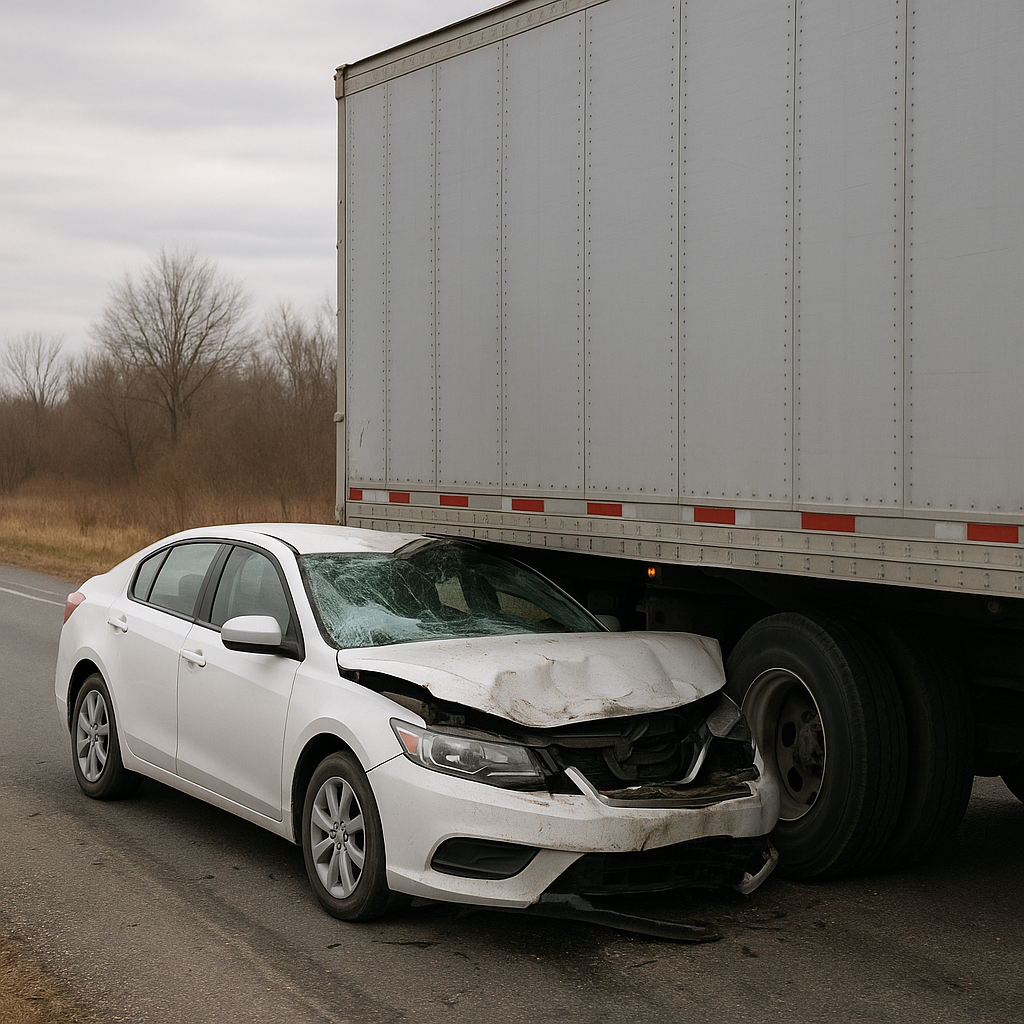
Underride Collision Involving Trailer Edge
An underride collision involving a trailer edge occurs when a smaller vehicle strikes the side or rear of a large trailer and slides beneath it. This situation is most often associated with semi-trailers or other commercial vehicles due to their significant ground clearance. The dynamics of such incidents present specific physical and safety challenges for all parties involved.
Underride collisions differ from other vehicle crashes because the smaller vehicle’s front end can travel under the trailer, often resulting in contact between the trailer’s edge and the windshield or upper cabin of the lower vehicle. This article examines how these scenarios typically unfold, what usually happens next, and the considerations that can follow an underride crash.
How a Trailer Edge Underride Collision Develops
Setting and Common Sequences
These events often occur at lower speeds but can also happen on highways. Situations that lead to underride involve trailer edges without effective guards or highly visible markings. Reduced lighting, poor weather conditions, or sudden stops can increase the likelihood. A trailing passenger car may be unable to brake in time or may not see the trailer’s edge clearly, especially at night or during heavy traffic.
Moment of Impact
When a vehicle’s front end makes contact with the trailer edge, it does not strike a flat surface at bumper height. Instead, the hood slides beneath the trailer, and the upper part of the passenger compartment meets the rigid structure of the trailer. The force and angle of impact influence the extent of intrusion into the upper part of the passenger car.
Typical Outcomes After an Underride Collision
Physical Effects to Vehicles
In most cases, the smaller vehicle experiences significant structural damage to the front cabin area. The windshield and roof may be compromised. The trailer itself might sustain minor physical damage, depending on speed and the placement of any guards or barriers at its edge.
Impacts on Roadway Conditions
The crash can leave debris and vehicle fluids scattered around the underride area. These byproducts may require cleanup to ensure continued road safety for other drivers and emergency responders.
Immediate Practical Concerns
Securing the scene and assessing risks to all occupants is one of the first tasks for responders. In serious underride wrecks, the stability of both vehicles may be affected, particularly if the smaller vehicle remains partially lodged beneath the trailer.
Factors Considered Following the Incident
How Visibility and Warning Play a Part
Observers often want to know if reflective markings or underride guards could have made a difference. Visibility during the incident, weather conditions, and traffic density are all evaluated to understand the main contributing factors.
Role of Equipment and Design
Discussion sometimes centers on the trailer’s compliance with current safety recommendations, such as underride protection devices and enhanced reflectors. The absence or failure of such features may be noted.
Questions About Road Safety
Those learning about these incidents often raise concerns about overall roadway design, including lighting at intersections and maintenance of road signage. The positioning of warning signs in advance of areas with high truck traffic can also come into consideration.
Emergency Response and Coordination
How quickly emergency personnel arrive and manage traffic flow is usually observed and documented. The nature of an underride collision can dictate the types of resources responders deploy at the scene.
A Look Toward Improving Understanding
Trailer edge underride collisions draw sustained interest due to their unique dynamics and potential consequences. Ongoing analysis and discussion support efforts to minimize risks through improved vehicle design, roadway features, and awareness. Each incident contributes to a broader understanding of this specific collision type and the factors that influence its outcome.