
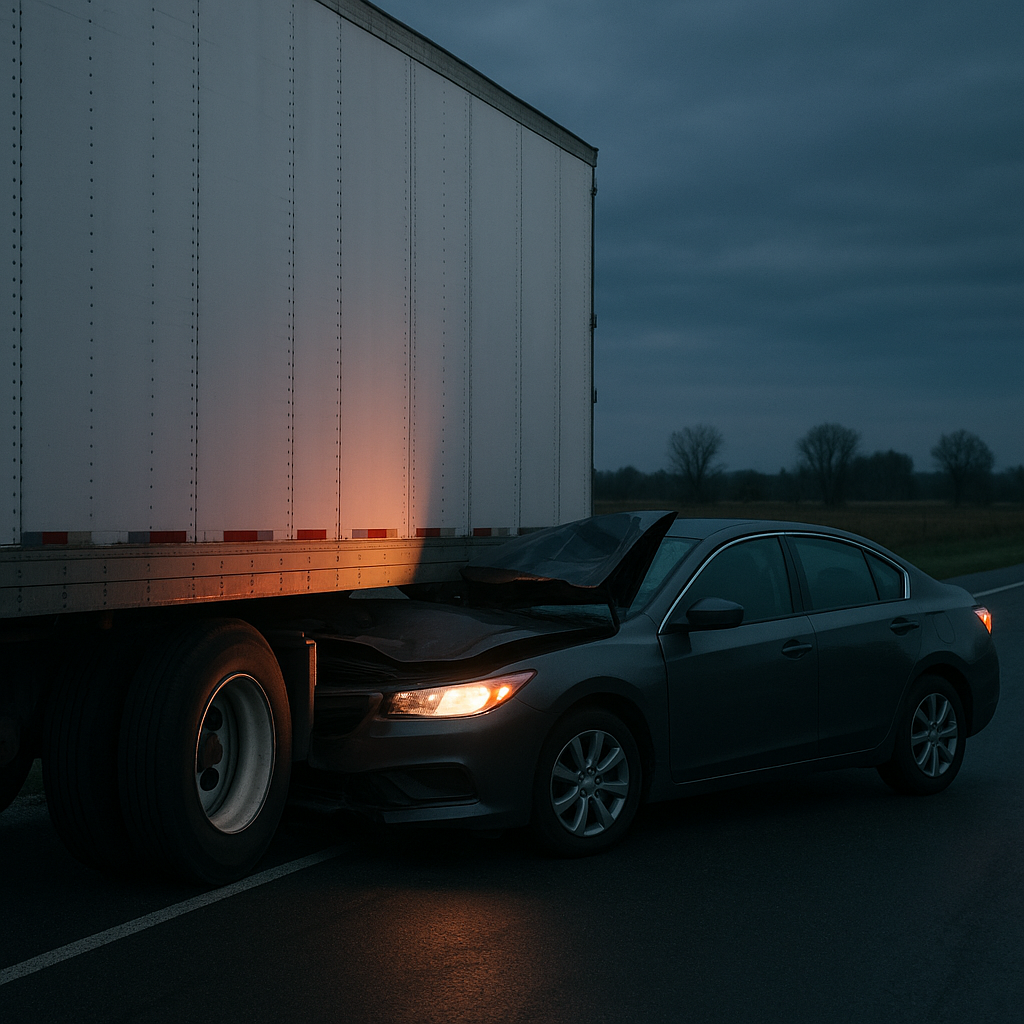
Underride Collision Involving Trailer Lighting at Dusk
Underride collisions can occur when a passenger vehicle moves underneath the rear or side of a large trailer. These incidents are particularly complex during certain lighting conditions, such as dusk. Reduced visibility paired with insufficient trailer lighting creates a set of circumstances that can result in serious outcomes.
Dusk is a transitional time when driver perception and lighting reliability are both particularly important. The interplay between natural light fading and the artificial illumination from vehicles comes into sharp focus as the sky darkens, raising concerns about whether trailers remain clearly visible to approaching traffic.
How Dusk Lighting Contributes to Underride Collisions
Reduced Visibility During the Transition from Day to Night
As daylight fades, shadows stretch and visual contrast diminishes. Drivers may find it more difficult to distinguish the outline of a parked or slow-moving trailer, especially when the vehicle’s lighting does not fully compensate for the dwindling natural light. Dusk lighting underride scenarios often arise because nearby drivers cannot easily perceive the trailer in time to respond.
The Role of Trailer Lighting in Driver Awareness
Properly functioning trailer lights, including tail lamps and reflectors, are crucial in alerting other motorists to the presence of a large vehicle. At dusk, if the lighting is dim, obscured, or malfunctioning, the risk of an underride event increases. Even partial lighting failures can reduce the distance at which a trailer is perceptible, affecting driver reaction times.
Reflective Tape and Additional Precautions
Some trailers feature reflective tape or markers designed to enhance visibility beyond the capabilities of traditional lights. At dusk, the usefulness of these enhancements becomes more pronounced, but their effectiveness may still be limited compared to fully illuminated lighting systems.
Outcomes Following a Dusk Underride Event
Physical Results for Vehicles
Underride collisions often lead to significant structural damage to the front of the passenger vehicle. The lower profile of the car compared to the trailer can cause the vehicle to wedge underneath, resulting in damage to the hood, windshield, and roof. The trailer may show minimal visible damage, especially if the main impact is absorbed by the underride area.
Challenges for Occupants and Emergency Responders
After such crashes, accessing vehicle occupants can be complicated. The intrusion of the trailer’s structure into the car’s passenger compartment sometimes makes door access difficult. Emergency responders typically assess structural integrity and vehicle positions before beginning to assist.
Traffic and Scene Management at Dusk
A dusk lighting underride often disrupts traffic flow, particularly if the incident occurs on a busy route. As the evening proceeds, the transition to full darkness can affect both the visibility of the collision site and the efficiency of incident response teams managing the scene.
Investigation and On-Site Assessments
Responders may use temporary lighting to assess the scene, inspect the condition of trailer lighting, and document environmental factors. The fading light at dusk requires careful examination of both the physical and situational aspects of the collision.
Common Concerns After an Underride Collision at Dusk
Questions About Lighting and Safety Equipment
Observers and those involved may wonder whether the trailer’s lights were operating properly and if additional reflective markings could have prevented the incident. These questions often arise in both local discussions and wider industry considerations after dusk lighting underride situations.
Considerations on Road and Weather Conditions
Dusk does not occur at a set time each day, and its effects may be intensified by wet roads, fog, or other weather patterns. Drivers sometimes ask whether varied conditions at dusk further increase risk, and if existing safety precautions are enough to address these challenges.
Awareness of Visibility Limitations
Conversations often turn to how vehicle operators—both of passenger cars and large trailers—can anticipate and compensate for dusk visibility limitations. This includes thoughts on when to check lighting, use of headlights, and timing of travel.
Potential for Technology Solutions
As technology advances, there is interest in exploring how automated lighting systems or advanced sensors might improve trailer visibility at dusk in the future. These discussions center on ongoing efforts to prevent underride collisions.
Final Reflections on Underride Risks During Dusk Lighting
Awareness of the unique risks that dusk lighting poses for trailer underride situations continues to shape road safety conversations. The shift from day to night challenges the effectiveness of lighting systems, underscoring the importance of both maintenance practices and continued research. Improved visibility and awareness remain key focuses as drivers and fleet operators look to minimize underride encounters during this transitional hour.