
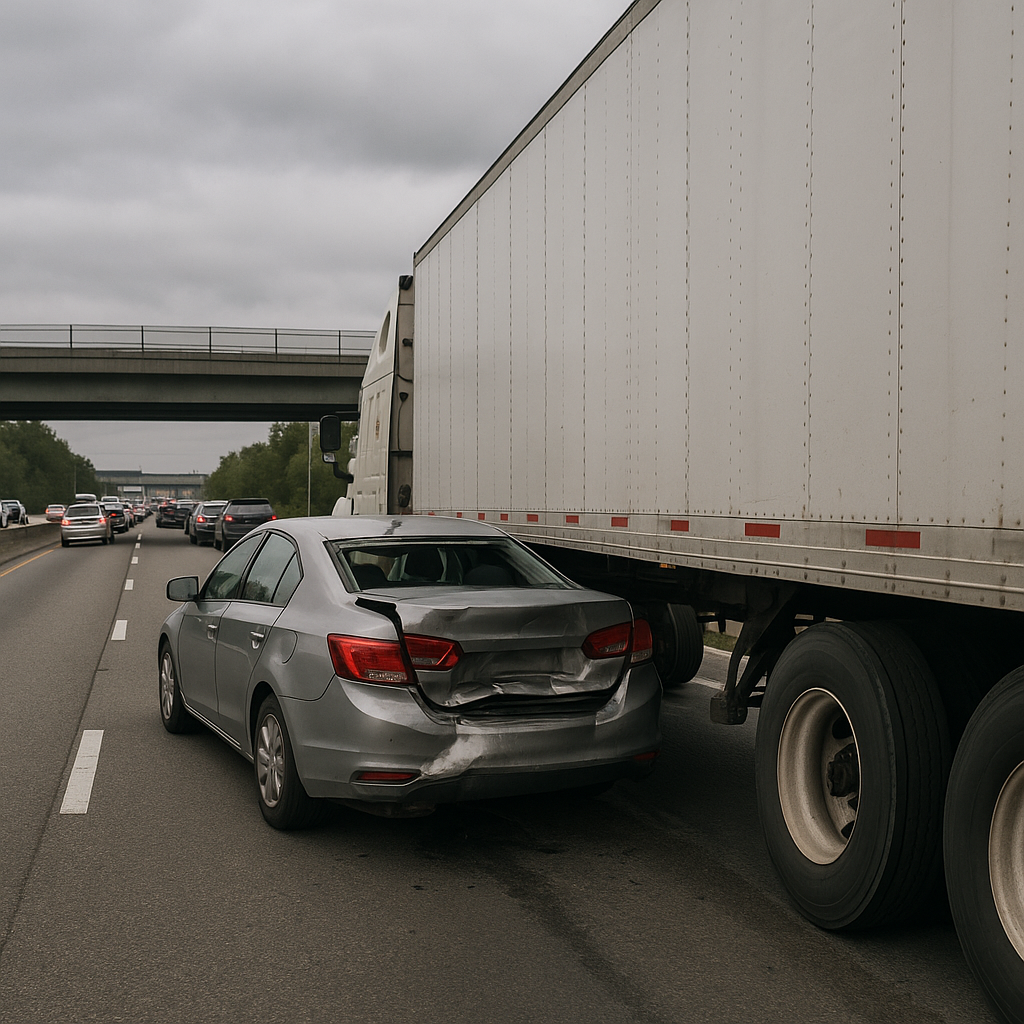
Underride Collision Near Freeway Bottleneck
A freeway bottleneck is an area where traffic flow narrows or slows, often due to lane reductions, on-ramps, or construction. These areas can create conditions in which traffic suddenly stops or slows. In this context, one type of incident that may occur is an underride collision, where a passenger vehicle slides underneath the rear or side of a larger truck or trailer.
Incidents involving underride collisions in bottleneck areas are particularly concerning due to the rapid change in speed and the presence of large vehicles. Sudden slowdowns can catch drivers off guard, increasing the risk that a smaller car might end up partially beneath a truck or trailer.
Typical Sequence of an Underride Collision
How These Accidents Develop
A freeway bottleneck often forms unexpectedly. Dense traffic may force larger trucks to brake quickly. If a passenger vehicle follows too closely or fails to notice brake lights ahead, it may not have sufficient time or space to stop. The disparity in height between standard cars and most truck trailers means that the car’s front end can slide underneath the trailer during a collision.
Contributing Factors in Bottleneck Environments
Short following distances, distraction, fatigue, and changing speeds make bottleneck zones complex. Even well-intentioned drivers may be affected by limited visibility, especially when trucks obscure the flow of traffic ahead. The physical nature of these collisions is shaped not only by the speeds involved but also by the lack of underride guards or compromised safety devices.
Immediate Aftermath and Physical Outcomes
Vehicle Condition Following Impact
After an underride incident, the smaller vehicle often sustains significant damage to the windshield, roof, and passenger compartment. The lower profile of the car relative to the trailer can lead to the compromising of critical structural areas.
Traffic Effects After a Collision
Once a collision happens near a freeway bottleneck, traffic typically slows further. Emergency services may respond, necessitating lane closures or detours. This can amplify the original bottleneck, leading to additional delays along the affected route.
Emergency Response and Scene Management
First responders usually prioritize clearing the area and assisting anyone involved. Specialized equipment might be needed to separate vehicles. Because of the visibility and safety challenges at bottlenecks, managing approaching traffic becomes a key concern for those directing the scene.
Common Questions and Ongoing Concerns
Safety Features and Engineering
Many people wonder about the safety measures in place to prevent underride collisions. Modern trailers may have underride guards designed to mitigate the severity of these accidents, but their effectiveness can vary. Questions about the standards and maintenance of these features often arise after an event.
Preventative Steps for Bottleneck Areas
There is also ongoing discussion regarding infrastructure improvements, traffic flow management, and the potential benefits of driver-assist technologies. Changes in road layout, better signage, and stricter enforcement of speed limits may all play a part in reducing risks in the future.
##### Psychological Impact and Community Dialogue
Witnessing or being involved in an underride collision can influence how people perceive bottleneck zones. Discussions in communities and among safety officials often focus on awareness, driver education, and practical steps to reduce the likelihood of future incidents.
Considerations Moving Forward
Understanding the dynamics of underride collisions near freeway bottlenecks helps support ongoing efforts to make highways safer. These incidents highlight the complexities of driving in congested conditions and the value of effective engineering, attentiveness, and responsive infrastructure. As bottlenecks remain a reality on busy freeways, awareness continues to be a cornerstone of safer travel for all roadway users.