
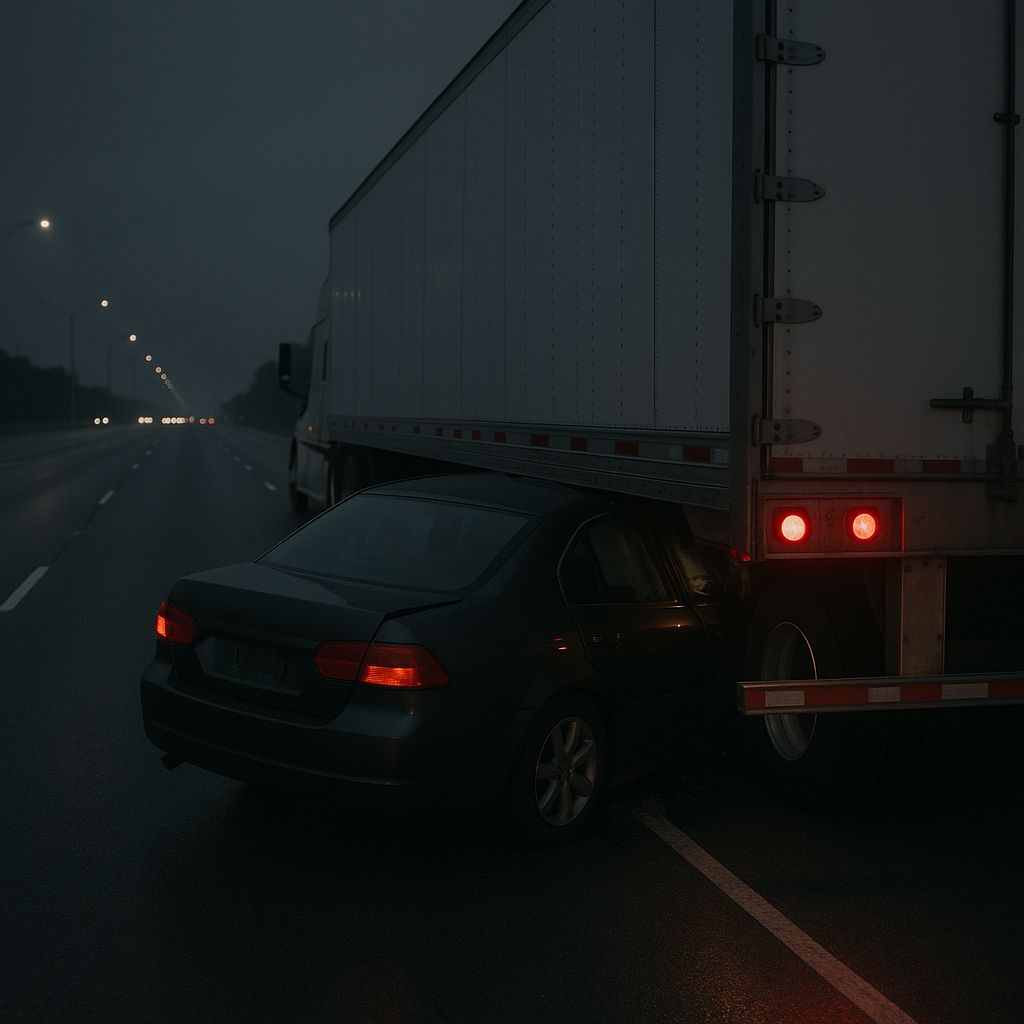
Underride Crash During Nighttime Freeway Driving
Nighttime driving on freeways introduces a higher set of risks due to reduced visibility and increased driver fatigue. Among the most serious incidents that can occur in these conditions is a nighttime freeway underride crash. This type of accident typically happens when a passenger vehicle slides underneath the trailer of a larger truck, often resulting in severe consequences.
In the following sections, we explore how underride collisions can unfold in freeway settings at night, the immediate aftermath, and questions that may arise for those involved.
Typical Sequence of Events in Nighttime Freeway Underride Collisions
Reduced Visibility and Reaction Time
During night hours, headlights are the primary source of illumination. Glare, limited sight distance, and hard-to-see obstacles can lower reaction time. A large truck moving at highway speeds or stopped on the shoulder may appear suddenly, giving little time for nearby drivers to respond.
The Impact Moment
When a passenger vehicle strikes the side or rear of a truck’s trailer, it may slide under the higher chassis. This often occurs if the reflective markings are not clearly visible or if there is insufficient lighting. At freeway speeds, the force of the collision can be significant.
Effects on Vehicle Structure
The front end of a car is often low enough to travel partially or fully beneath the trailer. This risks severe deformation of the passenger compartment, depending on the speed and angle of impact.
Immediate and Practical Outcomes After the Incident
First Responses at the Scene
Immediately following a nighttime freeway underride crash, individuals in nearby vehicles may notice debris or interrupted traffic flow. Hazard lights from stopped cars or trucks are common. Emergency responders typically arrive to assess the situation and provide any necessary assistance.
Traffic Disruptions and Scene Management
A freeway lane may be temporarily closed to manage the crash site safely. During nighttime hours, this can make visibility for other drivers even more challenging, increasing the need for clear instructions from responders.
Vehicle Damage and Drivability
Passenger vehicles involved in underride incidents often sustain extensive front-end damage. The likelihood of the car being drivable after such a crash is generally low. Trucks may also exhibit damage, especially to the trailer’s underride guards or structural frame.
Secondary Hazards
Debris on the roadway and fluid leaks can present additional hazards to approaching traffic and first responders. Nighttime conditions make it more difficult to detect secondary risks quickly.
Common Concerns and Questions After an Underride Collision
Safety Features and Crash Prevention
Many people wonder about the effectiveness of current preventive measures, such as reflective tape on trailers or underride guards. Nighttime conditions may reduce the visibility of these features, leading to questions about their adequacy or potential improvements.
Technology and Driver Awareness
Some ask whether collision-avoidance systems or advanced lighting can help prevent underride crashes at night. While these tools offer promise, their effectiveness can vary based on maintenance and driver attentiveness.
Emotional and Practical Steps
In the aftermath, it is common for individuals to experience confusion or uncertainty about what to do next. Aside from ensuring safety and waiting for professional responders, many seek information on how such incidents are typically managed and what resources are available for support.
Returning to the Road
Traffic may resume only once the scene is cleared and vehicles deemed drivable are safely removed. Authorities may inspect the area to confirm it is safe before reopening lanes to traffic.
Ongoing Considerations for Nighttime Freeway Safety
Nighttime freeway underride crashes highlight the unique risks of low-light, high-speed environments. Staying alert, maintaining proper following distances, and ensuring vehicle lights are functioning can contribute to overall safety. Awareness of how these incidents unfold helps drivers remain prepared and responsive during nighttime freeway travel.