
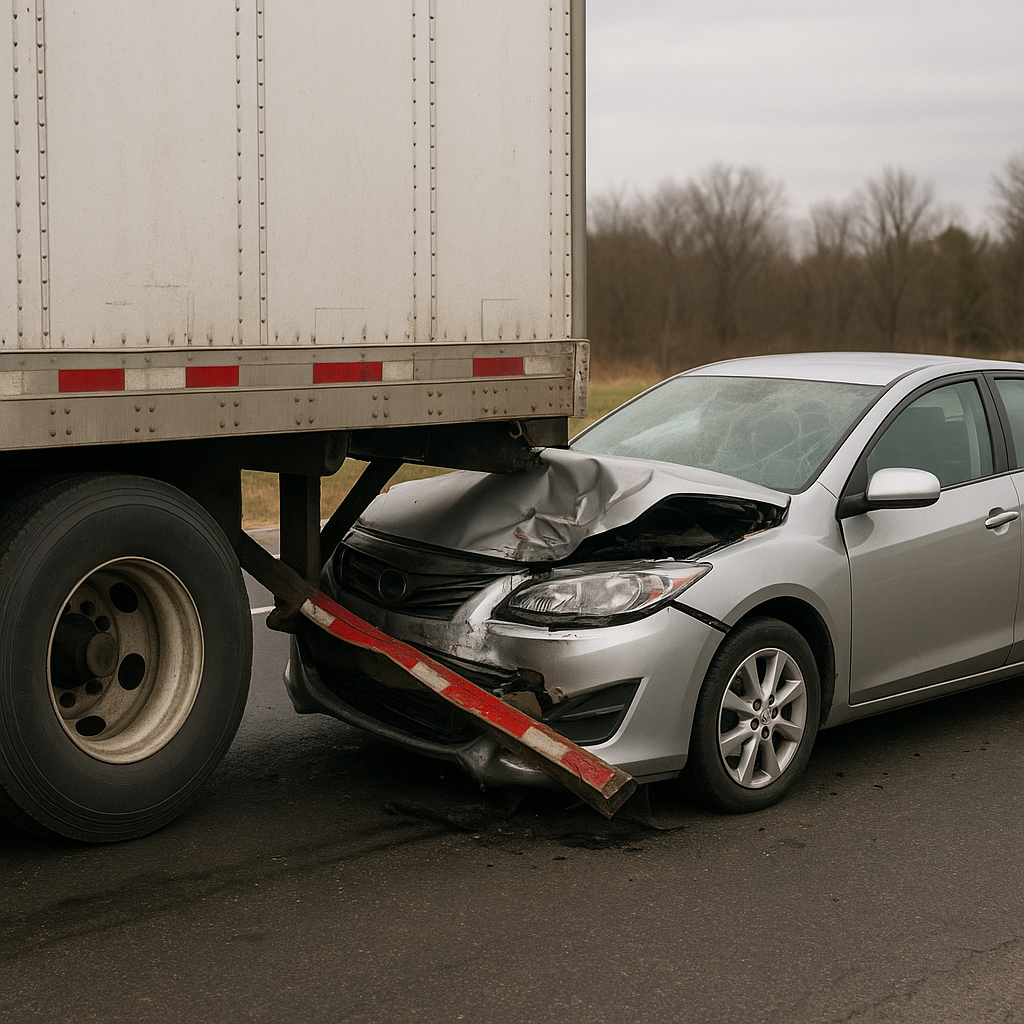
Underride Crash Involving Trailer Rear Guard Failure
In certain roadway situations, collisions between passenger vehicles and large commercial truck trailers can have serious results. One scenario that raises notable concerns is when a car strikes the rear of a trailer, and the intended safety features do not perform as designed. A key device in the prevention of severe accidents is the trailer’s rear guard, which is meant to stop vehicles from sliding underneath in a collision. When this rear guard fails, the consequences can be significant.
This article explores the circumstances and outcomes surrounding underride crashes involving trailer rear guard failure, explaining common events and broader implications for road safety.
What Happens During a Rear Guard Underride Crash
Typical Sequence of Events
In most cases, an underride crash of this kind begins when a passenger vehicle, such as a sedan or compact car, impacts the back end of a commercial trailer. The rear guard, also known as an underride guard, is designed to prevent the smaller vehicle from continuing underneath the higher chassis of the trailer.
Rear Guard Performance and Its Limitations
A properly installed and maintained rear guard should stop the forward motion of a car. However, a rear guard failure underride means the guard does not effectively resist the impact. The car may then underride the trailer, placing its passenger compartment in direct contact with the trailer’s lower edge.
Common Points of Failure
Breakdowns can result from weakened welds, corrosion, inadequate design, or improper installation. Sometimes, the crash dynamics exceed what the rear guard was engineered to handle. Any of these factors may contribute to the guard collapsing, detaching, or being bypassed entirely during the crash.
Outcomes and Immediate Aftermath
Physical Results of Underride Incidents
When the rear guard fails, the car often sustains substantial roof and windshield intrusion. Modern trailers may accommodate a range of car heights, but rear guard failure underride scenarios can still result in severe impact forces being transferred into the vehicle’s cabin.
Occupant Safety Concerns
Passengers in the smaller vehicle face higher risk of injury due to the incursion of the trailer structure. The safety features of the car, such as airbags and crumple zones, are generally less effective against this type of collision geometry.
Scene Management and Vehicle Recovery
After an underride crash, emergency responders must assess both vehicles for hazards. Trailers may need to be stabilized, and passenger vehicles carefully separated using specialized equipment, since structural damage can impede access.
Traffic Disruptions
Such incidents often result in extended closures of involved roadways while authorities document the scene and arrange for safe removal of vehicles. This may impact traffic patterns for several hours, depending on the severity of the crash and recovery process.
Ongoing Concerns and Considerations
Evaluating Rear Guard Standards
Following any incident involving rear guard failure, there are renewed questions regarding current safety regulations for trucks and trailers. Transportation agencies and manufacturers frequently review crash data to determine whether updates to guard strength or design are necessary.
Awareness Amongst Drivers
Some motorists are unaware of the risks posed by stopping closely behind large trailers. Understanding the role and limitations of trailer rear guards may encourage additional caution, especially in congested traffic or low-visibility conditions.
Practical Steps for Vehicle Operators
While there are no guarantees, proper maintenance of existing rear guards and adherence to regular safety inspections are commonly emphasized by fleet operators. Technological improvements and voluntary upgrades are also topics of ongoing discussion in the transportation industry.
Looking Toward Roadway Safety Improvements
Incidents involving rear guard failure underride prompt ongoing evaluation and adaptation in vehicle and trailer design standards. Continued research focuses on preventing underride events and minimizing their impact when they do occur. Safety organizations, manufacturers, and regulatory bodies regularly share data and collaborate on new engineering approaches to reduce risks on the road.
In summary, while rear guards play a crucial role in modern transportation safety, understanding their limitations can inform better practices and contribute to ongoing safety improvements for all road users.