
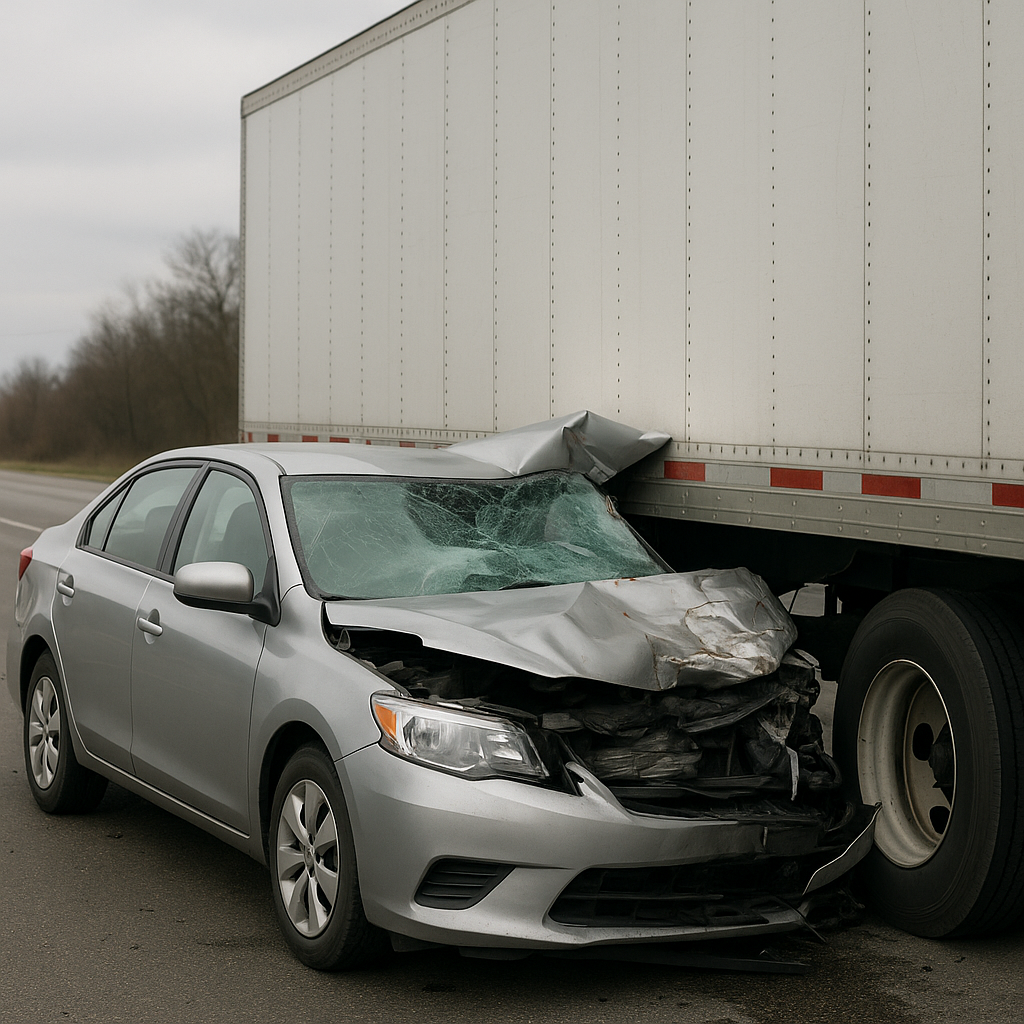
Underride Crash Involving Trailer Rear Impact
An underride crash involving a trailer rear impact occurs when a smaller vehicle collides with the back of a large truck or trailer and slides partially or completely underneath it. These incidents tend to be severe due to the height difference between passenger vehicles and commercial trailers, which can lead to significant vehicle damage and pose safety risks to vehicle occupants.
Rear impact underride incidents are a recognized concern for roadway safety. This article examines what typically happens in these situations, explores the immediate outcomes, and addresses common questions that follow such an occurrence.
How a Rear Impact Underride Crash Typically Unfolds
Sequence of Events in a Typical Scenario
A rear impact underride crash often begins when a passenger vehicle approaches the rear of a larger commercial truck and is unable to stop in time. This scenario may happen in various settings, such as slowed or stopped traffic, poor visibility conditions, or if a truck is parked or moving slowly along the roadway. Due to the higher ground clearance of trailers, a following car’s front end can slide beneath the trailer during a collision rather than absorbing the impact through its crumple zone.
Factors That Play a Role
Visibility can influence the likelihood of underride incidents. Poorly marked trailers, dim lighting conditions, or sudden stops may contribute to a driver’s reduced reaction time. Weather, road conditions, and the operational condition of brake lights and underride guards may also affect the outcome of such crashes.
Practical Outcomes Frequently Noted
Physical Impact on Vehicles
Following an underride event, the most apparent outcome is the degree of vehicle damage. Passenger cars typically suffer extensive damage to the hood, windshield, and roof area due to the trailer structure intruding into the vehicle cabin space. Commercial trucks are generally less affected structurally, though the collision can result in rear body damage or damage to underride guards if present.
Traffic and Emergency Response
Rear impact underride crashes commonly disrupt surrounding traffic, sometimes causing road closures or delays for extended periods. Emergency resources are often required to safely remove occupants, clear the vehicles, and ensure the area is safe for continued travel.
Vehicle Recovery and Roadway Safety
Recovery of the involved vehicles may require special equipment, especially if the car is lodged under the trailer. Cleanup and inspection may take longer than for typical rear-end collisions, which can cause lasting traffic impacts on busy routes.
Common Questions and Considerations Afterward
Concerns About Occupant Safety
One frequent concern after an underride crash is the condition of those inside the passenger vehicle. In these scenarios, the upper part of the car, which generally provides protection, may be compromised. Those nearby or involved may wonder about modern safety features or the effectiveness of underride guards and other safety technologies.
Questions About Collision Prevention
Observers often ask what measures could have prevented the incident. This typically leads to discussions on the importance of vehicle spacing, trailer markings, lighting, and rear underride guards as preventive or mitigating factors.
##### Inquiries on Roadway Design and Signage
Some people consider whether road design or signage could have reduced the risk by alerting drivers earlier to slow or stopped vehicles ahead, especially in areas prone to congestion or sudden slowdowns.
Reflection on Rear Impact Underride Crashes
Underride crashes involving the rear of trailers highlight specific challenges posed by differences in vehicle size and design on shared roadways. While improvements in safety equipment aim to reduce these occurrences, awareness and careful driving remain important. Understanding the physical and situational aspects of these incidents helps inform discussions on future roadway safety enhancements and vehicle technologies.