
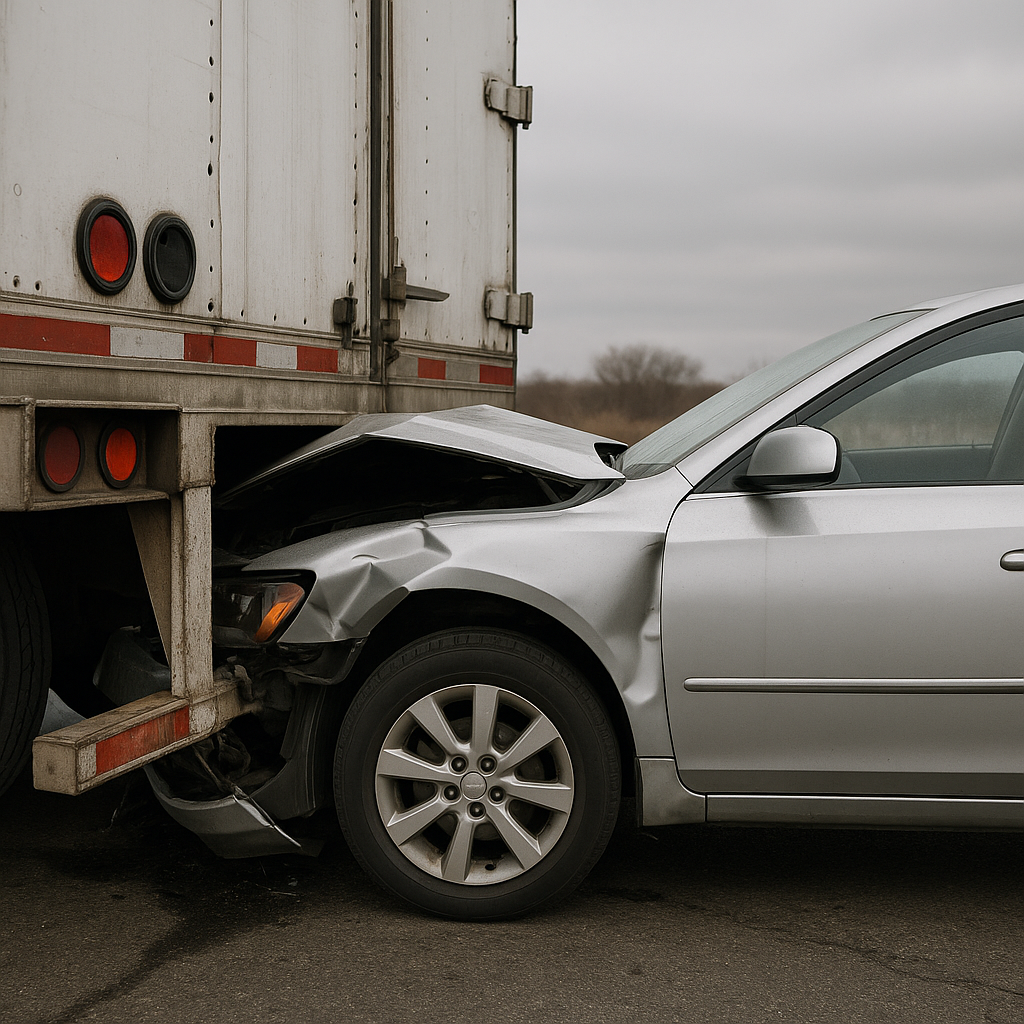
Underride Crash Involving Trailer Rear Lighting Malfunction
An underride crash involving a trailer rear lighting malfunction is a type of collision in which a smaller vehicle strikes the rear of a large trailer and slides underneath. This scenario may occur when the rear lights on a trailer are not functioning correctly, making the trailer less visible, especially at night or in low-visibility conditions. Such incidents often raise questions about the sequence of events, their effects, and the preventive measures that can reduce their occurrence.
Typical Sequence in a Rear Lighting Malfunction Underride Crash
Initial Conditions Before the Incident
In many cases, the trailer is stationary or moving slowly, such as when slowing for a turn or stop. If the trailer’s rear lights are malfunctioning, their brake lights, tail lights, or indicators may not provide adequate visual cues to other drivers approaching from behind. Reduced rear visibility can make it difficult for drivers to perceive the trailer’s presence or judge its speed.
How the Collision Often Occurs
Rear lighting malfunction underride crashes frequently happen at night or in poor weather. Without proper rear lighting, a following driver may not recognize the obstacle in time to avoid a crash. The smaller vehicle may continue traveling at road speed, making contact with the trailer’s back end. The car’s front end may wedge beneath the trailer floor, leading to what is described as an “underride.”
Factors Affecting the Severity
Several aspects may influence the seriousness of such collisions. The relative speeds involved, the car’s angle of impact, and the condition of the road can all play roles. The height and strength of the trailer’s underride guard, if present, often make a difference in the aftermath.
Common Results and Immediate Aftermath
Vehicle Damage and Scene Hazards
Smaller vehicles involved in underride collisions often experience significant front-end damage. The point of contact is typically low, bypassing safety features like bumpers. This can create complex accident sites with vehicle parts strewn on the roadway, which may slow traffic or heighten risks for other motorists.
Challenges for Emergency Responders
First responders may need to secure the area quickly for safety. The embedded position of the involved vehicles can make assessment and removal challenging. The trailer driver and other motorists may require clear communication by traffic authorities to reroute or manage flow near the scene.
Impact on Traffic Flow and Operations
Traffic congestion is a common result as lanes may become blocked. Depending on the road type and time of day, this can lead to significant delays. Crews may need specialized equipment to separate vehicles before clearing the scene.
Issues and Concerns That Arise Afterwards
Questions About Maintenance and Prevention
A common concern centers around vehicle maintenance, particularly regarding trailers’ rear lighting systems. Observers often wonder about the standards for lighting inspections and the frequency with which rear lights are tested before travel.
Visibility Measures and Additional Safety Devices
Some people inquire about reflective markings and rear underride guards. There is ongoing discussion about whether additional visual aids such as brighter lights or more reflective tape could further decrease these types of accidents.
Considerations for Awareness and Driver Training
Discussions may also focus on driver awareness. There is interest in enhanced training, emphasizing distance-keeping, anticipation of stopped vehicles, and methods for identifying poorly illuminated trailers under various road conditions.
Concluding Thoughts on Rear Lighting Underride Scenarios
Rear lighting malfunction underride crashes illustrate the importance of functional lighting and visibility on roadways. These incidents underscore the interconnected roles of maintenance, design, and driver attention. By understanding the contributing factors and typical outcomes, road users and fleet operators can better appreciate steps that help support overall roadway safety.