
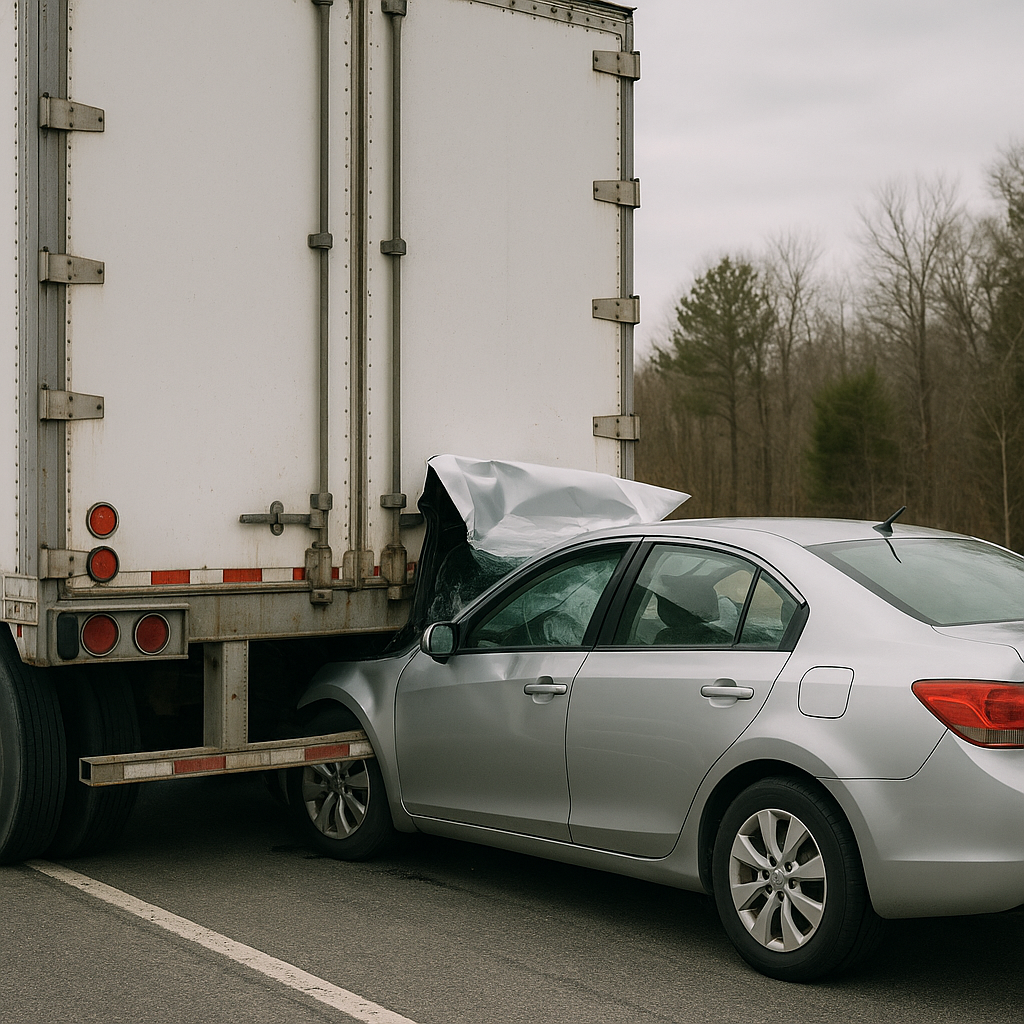
Underride Crash Involving Trailer Rear Visibility
An underride crash occurs when a smaller vehicle slides underneath the rear or side of a large commercial trailer. These incidents often involve issues related to the visibility of the rear of the trailer. Rear visibility underride situations are a particular focus for safety discussions, as trailer design and lighting can impact how well following drivers recognize potential hazards.
Such crashes typically happen at night or in low-light conditions, but reduced visibility during adverse weather or on poorly lit roads can also contribute. The nature and severity of these incidents highlight the interplay between equipment, lighting, and driver awareness.
How Rear Visibility Contributes to Underride Crashes
The Role of Lighting and Markings
Rear visibility underride incidents often begin with a trailing driver’s inability to see the trailer clearly enough to react in time. Trailers equipped with faded, obscured, or absent reflective markings are harder to notice. Malfunctioning or missing rear lights further diminish visibility, especially after dusk.
The Chain of Events in a Typical Underride Collision
A common scenario sees a passenger vehicle approaching a slow-moving or stopped trailer at night. If the trailer’s rear is poorly lit or its reflectors are dirty or damaged, the driver may not perceive its presence until it is too late. The vehicle then strikes the trailer from the rear and slides partially or completely beneath it. The force of impact depends on both vehicles’ speeds and the height differential between the trailer’s rear and the car’s front.
Factors That May Increase Risk
In addition to lighting, weather conditions such as heavy rain or fog can reduce visibility further. The absence of street lighting exaggerates this effect. Maintenance issues, including non-reflective paint or aging materials, can all play significant roles.
Outcomes Commonly Seen After Underride Accidents
Physical Impacts on Vehicles
Vehicle damage in rear visibility underride crashes is often severe, with the upper section of the car absorbing much of the force. The nature of this damage can vary, but roof intrusion and windshield breakage are frequent due to the structure of the trailer relative to the passenger space in the vehicle.
Potential for Injury
While the specific outcomes depend on numerous variables, the structure of modern trailers and the underride guard are critical factors. A robust guard, designed to prevent deep intrusion, can sometimes limit the severity of the incident.
Scene Management and Traffic
Emergency response teams may close or restrict affected lanes to manage debris and assess vehicle damage. Trailer placement and lighting are often examined in the aftermath to identify contributing factors and recommend future safety adjustments.
Questions and Considerations That Often Arise
How Visibility Standards Help
Many wonder how required markings and lighting are regulated. The presence of reflective tape, illuminated lamps, and visibility requirements are designed to mitigate the possibility of underride collisions. Regular inspection ensures that trailers comply with minimum standards, but the effectiveness depends on ongoing maintenance and attention by operators.
What Drivers Can Do
Drivers frequently ask about safe following distances and recognizing trailers under low-light conditions. Maintaining a greater distance and being alert to faint lights or reflective surfaces on the roadway can provide additional reaction time.
##### The Importance of Staying Informed
Awareness of the conditions that increase underride crash risks is often mentioned. Both commercial drivers and other motorists benefit from updated information regarding trailer lighting, weather impacts, and recommended precautions.
Ongoing Efforts and Awareness
Safety organizations and transportation agencies continue to research underride crash prevention. Design improvements in trailers, such as enhanced underride guards and more visible marking materials, are studied and implemented as new information becomes available. Cultivating awareness of rear visibility underride situations contributes to ongoing progress in road safety and equipment standards.