
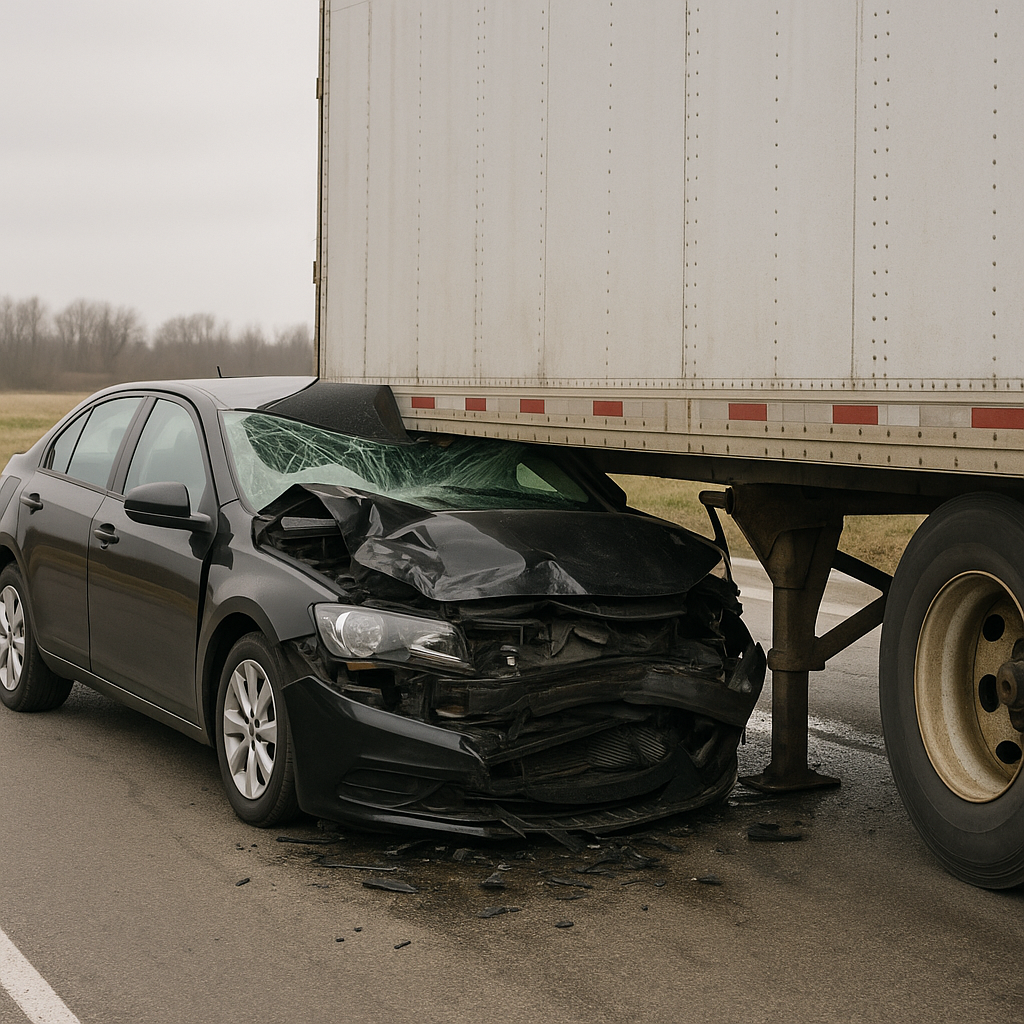
Underride Crash Involving Trailer Underrun
An underride crash happens when a smaller vehicle, such as a car, collides with the back or side of a much larger trailer and slides beneath it. This particular scenario, referred to as a trailer underrun, is a serious type of road incident. These events are generally sudden and can result in significant consequences for both the vehicles and those involved.
A typical underrun trailer crash often draws attention due to its distinct pattern. Many people may not be familiar with how these accidents unfold or what may occur next. Understanding this type of crash involves looking at the sequence of events and the aftermath that commonly follows.
How an Underrun Trailer Crash Usually Occurs
Sequence Leading to a Collision
In most cases, these crashes take place when a car travels behind a trailer or large truck. Often, factors such as low lighting, wet road conditions, or sudden braking by the larger vehicle can contribute. If the car is unable to stop in time, its front end may slide beneath the rear or side of the trailer.
Common Road and Traffic Conditions
Road visibility, speed, and driver attentiveness frequently play major roles in an underrun. Interstates, highways, and busy urban roads are environments where such incidents are typically reported. Unexpected slowdowns in traffic can make it difficult for following vehicles to maintain a safe distance.
Impact and Immediate Reactions
Once the front portion of a smaller vehicle moves under the trailer, the upper structure of the car often sustains significant damage. Airbags may deploy, and the force of collision can stop both vehicles abruptly or cause secondary impacts with nearby vehicles.
Physical and Practical Outcomes
Vehicle and Structural Damage
Due to the nature of trailer underrun crashes, substantial deformation may occur to the car’s roof and windshield area. In many instances, the trailer may receive only minor damage, while the smaller vehicle suffers the majority of the impact.
Safety Devices and Their Effectiveness
Some trailers are equipped with underride guards designed to prevent cars from sliding underneath. The presence or absence of these safety features often influences the extent of crash consequences. In scenarios where these devices are present and functional, damage to passenger vehicles may be mitigated.
Traffic Disruptions and Emergency Response
Crashes involving underrun trailers frequently lead to road closures or lane blockages. Emergency personnel typically arrive at the scene to assess the situation, provide medical attention, and clear the affected area. Tow trucks and specialized equipment are often needed to separate the involved vehicles.
Considerations and Common Questions
Why These Accidents Raise Safety Concerns
After an underrun trailer crash, questions often arise about highway safety standards and whether additional preventive measures are needed. Many people wonder about the technologies or road designs intended to reduce the risk of similar events in the future.
Potential Preventive Steps
Some individuals look for information about improvements in vehicle crashworthiness or trailer equipment such as reinforced bumpers and visibility enhancements. These topics continue to drive discussions among safety professionals and transportation planners.
##### Reactions from the Driving Community
Incidents of this type often prompt drivers to reflect on their own habits around large trucks. Maintaining greater following distances, remaining alert to changing traffic conditions, and being aware of a trailer’s stopping capabilities are points many consider afterward.
Understanding the Aftermath and Looking Ahead
Trailer underrun crashes highlight important factors in traffic safety and vehicle design. While these incidents present clear challenges, ongoing advancements in vehicle technology and roadway practices aim to reduce the frequency and severity of such events. Many drivers, vehicle manufacturers, and road authorities continue to examine this issue, contributing to broader awareness and ongoing improvements.