
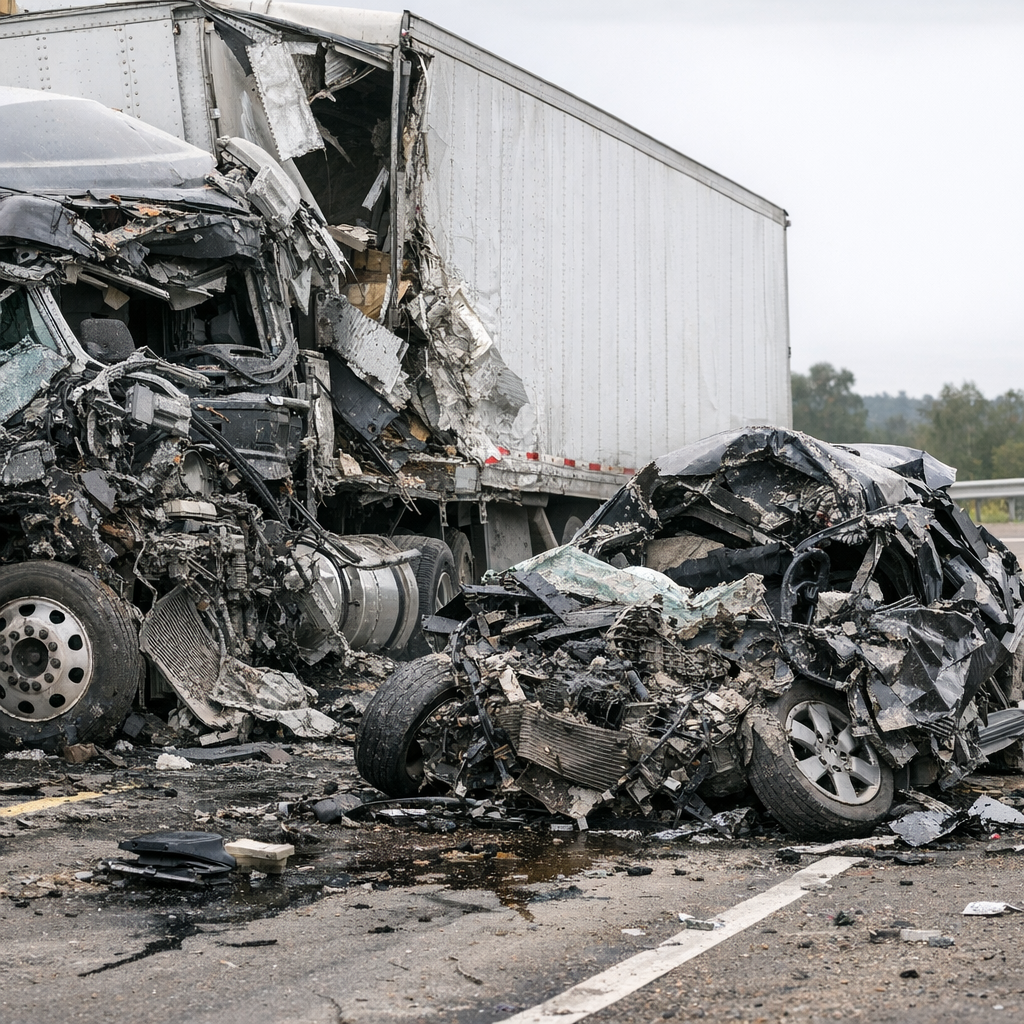
Understanding Why Some Truck Crashes Are Un survivable
Driving on highways presents various challenges, particularly when sharing the road with large trucks. These vehicles are central to commerce, transporting goods across the nation every day. However, their size, weight, and unique handling characteristics mean that accidents involving trucks can lead to devastating results. Some truck crashes, despite advances in road safety and vehicle design, remain unsurvivable due to a confluence of physical and situational factors.
High-Speed Collisions: The Enormity of Force
Highways typically feature higher speed limits, often raising the stakes when accidents occur. When a truck and a smaller passenger vehicle collide at these elevated speeds, the resulting forces can be immense. The disparity in size and weight means the truck exerts far greater force upon impact. In certain cases, smaller vehicles can be overwhelmed structurally by the mass of a truck, leaving little protection for those inside. Impact angles matter as well—side or head-on collisions at highway speeds can compromise even the most well-engineered safety features.
Cargo-Related Dangers and Vehicle Instability
Trucks routinely carry massive loads, and the nature of this cargo can create hazardous situations. In incidents involving rollovers or jackknifing, cargo may shift, amplifying the chaos as it destabilizes the truck or spills into surrounding lanes. In rare cases, hazardous materials transported in tanker trucks or containers may be involved, presenting additional risks that are difficult to mitigate outside of heavily controlled conditions. The mechanical energy at play during a crash involving fully-loaded trucks sometimes exceeds the capacity of any known safety technology to protect individuals during the collision.
Overwhelming Crash Forces and Burden on Safety Systems
Modern trucks and passenger vehicles are equipped with a wide array of safety enhancements, including reinforced cabins, airbags, and crumple zones. While these have contributed to the reduction of many injuries, unsurvivable truck crashes occur when the forces involved go beyond these systems’ ability to shield occupants. Safety measures are engineered to perform within certain limits, but at extreme speeds, or under extraordinary forces, the structure of the vehicles may be compromised rapidly, preventing any chance for survivability.
Broader Impacts on Families and Communities
The aftermath of a fatal truck accident reaches far beyond the immediate scene. Families affected by unsurvivable truck crashes often face sudden changes in their personal and economic lives. Loss of a loved one can result in long-term emotional and financial stress, impacting a household’s well-being for years. Communities, especially those in areas with frequent truck traffic, may experience heightened concern and push for improved safety practices to prevent similar incidents in the future. These events also affect first responders and witnesses, leaving a series of ripples that alter daily routines and local discussions about safety.
How Highway Design and Traffic Patterns Play a Role
Highways are designed to facilitate the rapid movement of large numbers of vehicles. However, merging lanes, construction zones, and sudden traffic slowdowns often create situations where trucks cannot maneuver or stop in time to avoid a collision. Additionally, unpredictable weather conditions like fog, rain, or ice can thwart even the best efforts to prevent a crash, leading to scenarios where the scale of the impact is simply too great for survival. Understanding these factors can help inform safer road use and policy design, though some situations remain beyond the reach of prevention.
Quiet Realities of Prevention and Preparedness
Road safety continues to evolve as vehicle manufacturers, freight companies, and transportation agencies look for new ways to minimize risk. Innovations in technology and education are helping to address some of the root causes of truck-related accidents. While progress is steady, the reality is that some crashes are, due to the physical laws at play, not survivable, even when all precautions are taken.
Ultimately, the complexity and unpredictability of highway travel mean that some truck crashes exceed the threshold of what modern technology and infrastructure can withstand. Examining these situations carefully helps clarify why certain incidents prove unsurvivable and highlights the ongoing importance of cautious driving, comprehensive training, and continued advances in road safety.