
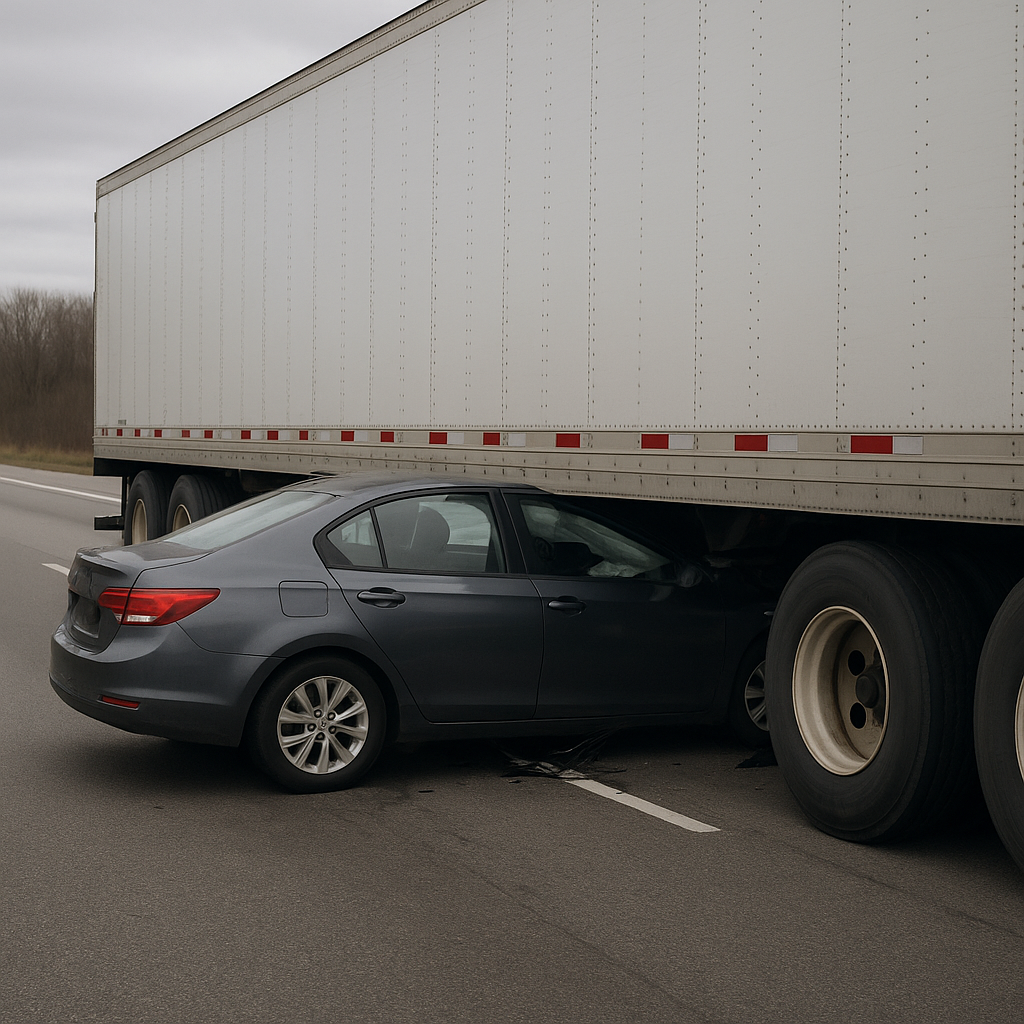
Vehicle Trapped Under Semi After Lane Change
Incidents involving a vehicle becoming trapped under a semi-truck during a lane change are uncommon but pose serious concerns. Known as “lane change underride,” this scenario occurs when a smaller vehicle slides underneath the side of a semi’s trailer, often during an attempted lane maneuver. Such events highlight the importance of driver awareness and road safety for all motorists.
These incidents typically lead to complex situations on busy roads or highways. Other drivers may witness the aftermath or become secondary participants if the collision impacts additional vehicles. Understanding what typically happens and the implications can help inform safe driving practices.
Typical Events During a Lane Change Underride
When two vehicles attempt to shift lanes simultaneously or when one does not notice the other, a side-impact can occur. If the smaller vehicle approaches the trailer’s side at a specific angle and speed, it may end up trapped beneath the semi.
Sequence of Actions After Impact
Immediately following this kind of collision, both vehicles may come to an abrupt stop depending on traffic speed and road conditions. Occasionally, the semi may drag the trapped vehicle a short distance before noticing the situation. Other motorists often react by slowing down or stopping, resulting in traffic congestion.
Involvement of Emergency Responders
In nearly every scenario like this, emergency crews are called to the scene. Their arrivals help ensure the safety of those involved, manage traffic, and clear the vehicles. First responders are equipped with tools to assess and stabilize the situation quickly.
Physical and Practical Aftermath
Even when traveling at moderate speeds, significant damage can occur to both the smaller vehicle and the semi’s trailer. The vehicle trapped underneath often sustains damage to its front end, windshield, and roof, while the semi may have damage to its side rails or undercarriage.
Disruption to Traffic Flow
Highways or multi-lane roads can become partially or fully blocked, leading to delays for other drivers. Authorities may need to reroute traffic until the vehicles are safely separated and the road cleared.
Post-Incident Vehicle Handling
Once the scene is secure and those involved have been accounted for, the vehicles are removed from the roadway. Specialized tow trucks are usually required for vehicles that have become physically connected due to the impact.
Common Questions and Concerns
People observing or hearing about a lane change underride often have a number of questions regarding safety and prevention measures.
How Frequently Do These Incidents Occur?
Lane change underride scenarios are relatively rare compared to other types of roadway incidents, but they are a concern due to their severity. Agencies study these events to learn more about potential safety improvements.
Factors Contributing to Underride Incidents
Various elements may influence the risk, including visibility, blind spots, speed, and road conditions. Awareness and adherence to safe lane change practices remain the most effective means of prevention.
##### Considerations Regarding Vehicle Design
Some modern trucks are fitted with side guards designed to prevent smaller vehicles from sliding underneath. Ongoing research aims to improve standard safety features for both trucks and passenger vehicles.
Looking Forward to Increased Roadway Safety
With advancements in vehicle technology and continued emphasis on safe driving, the frequency and impact of lane change underride incidents can be reduced. Greater awareness among both truck drivers and passenger vehicle operators contributes to safer lane changes and road sharing.
Through increased understanding and the adoption of preventative measures, drivers can better navigate multi-lane environments, minimizing the risk of severe incidents like vehicle entrapment under semi-trailers. Persistent road safety education and research play a vital role in supporting positive outcomes for all road users.