
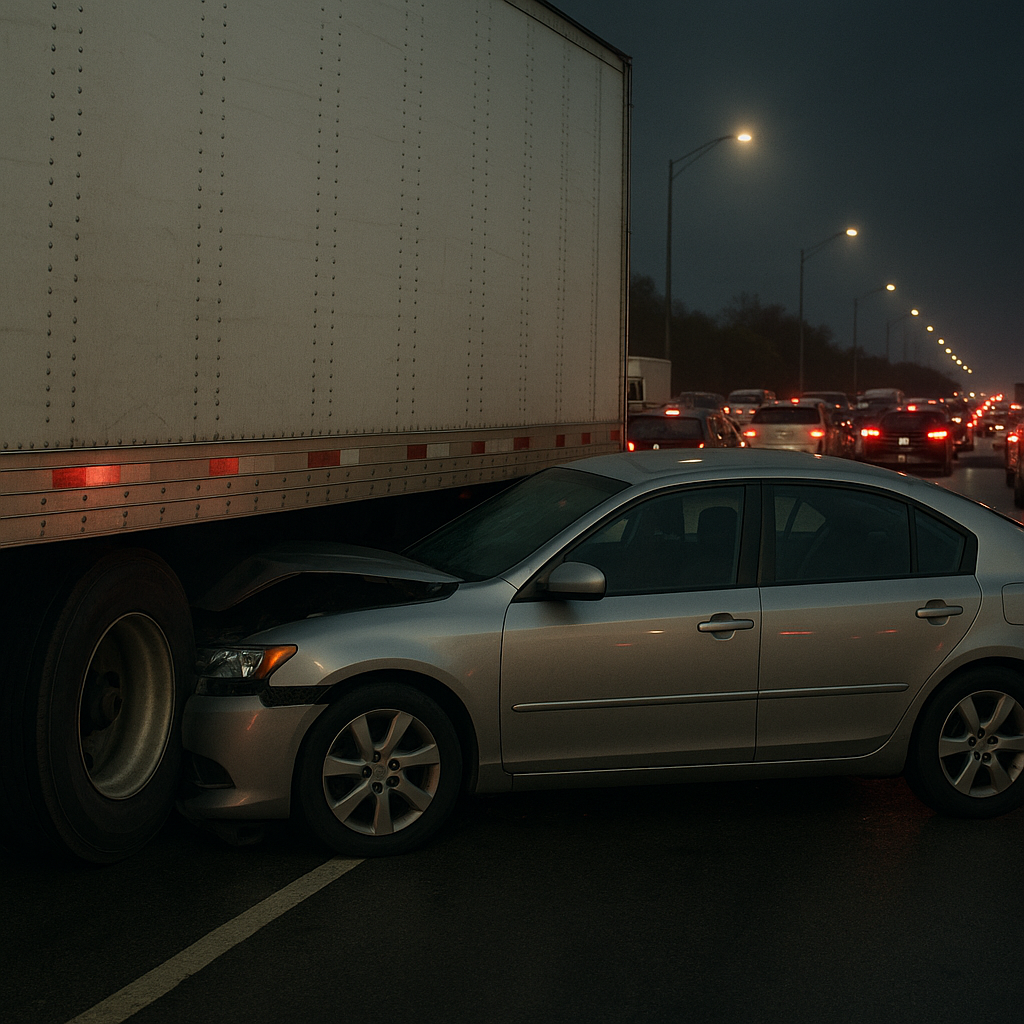
Vehicle Underride During Nighttime Congestion
Nighttime congestion is a common occurrence on many major roadways, especially in and around densely populated urban areas. During these periods, traffic slows or stops altogether, creating challenging conditions for drivers of all types of vehicles. One situation that sometimes arises in these conditions is vehicle underride, when a smaller vehicle slides underneath a larger commercial vehicle, like a tractor-trailer.
These incidents typically happen with little warning and under low visibility conditions. Understanding how night congestion underride situations occur, the usual outcomes, and the questions they raise can inform both motorists and those interested in traffic safety.
The Typical Sequence of Night Congestion Underride
How Visibility and Traffic Patterns Contribute
During congested night travel, the combination of reduced lighting and frequent stops increases the risk of crashes. Headlights, brake lights, and reflective surfaces may be less visible due to weather or the glare from surrounding vehicles. A car approaching stopped or slow-moving trucks may not notice the trailer in time to brake fully, leading to an underride.
Driver Response and Time Constraints
Often, drivers receive very little time to react. By the time the hazard is visible, braking distance may be inadequate. High-density traffic can also limit maneuvering space, which compounds the problem. Slower reaction times at night, combined with congestion, can create a scenario where collision is difficult to avoid.
The Role of Truck Design
Most large trucks are equipped with underride guards to help prevent such incidents. However, in certain angles or if guards are absent or damaged, a vehicle may still slide beneath a trailer.
Observable Outcomes After the Incident
Immediate Traffic Disruption
Following a night congestion underride incident, traffic typically slows further or comes to a halt. Emergency services may need to access the scene, resulting in lane closures or rerouting. This can add to overall congestion and extend traffic delays.
Physical Damage and Safety Considerations
Underride events often lead to significant vehicle damage, especially to the smaller vehicle involved. The extent can depend on speed, point of impact, and whether safety features like underride guards performed as intended.
Scene Management
First responders typically focus on securing the area for their safety and that of all roadway users. Hazard lights and reflective barriers are employed to alert oncoming traffic, especially important in low-visibility nighttime conditions.
##### Longer-Term Road Impacts
Road surfaces or barriers may sustain damage, leading to repairs or additional maintenance work. This can affect traffic flow for hours or, in rare cases, days following the event.
Common Concerns and Questions That Arise
Safety and Prevention
Many people wonder about strategies to avoid night congestion underride situations. Questions often focus on the effectiveness of truck underride guards, reflective markings, and driver awareness of night hazards.
Vehicle Technology and Infrastructure
Technological advancements, such as improved lighting, automatic emergency braking, and conspicuous truck markings, are frequently discussed as potential solutions. Infrastructure measures, like better signage or road lighting in congestion-prone areas, are also a topic of discussion.
Psychological Impact on Drivers
Drivers involved in or witnessing such an incident might have concerns about safety in similar situations. Improved awareness and understanding of how and why these incidents happen can sometimes ease anxiety while on the road at night.
Reflecting on Nighttime Underride Incidents
Events of night congestion underride can create complex scenarios for all involved, from motorists to highway personnel. Understanding typical sequences, outcomes, and prevailing questions can support a careful approach to nighttime driving. Ongoing enhancements in vehicle design, road engineering, and public awareness can contribute to increased safety in these challenging nighttime congestion environments.