
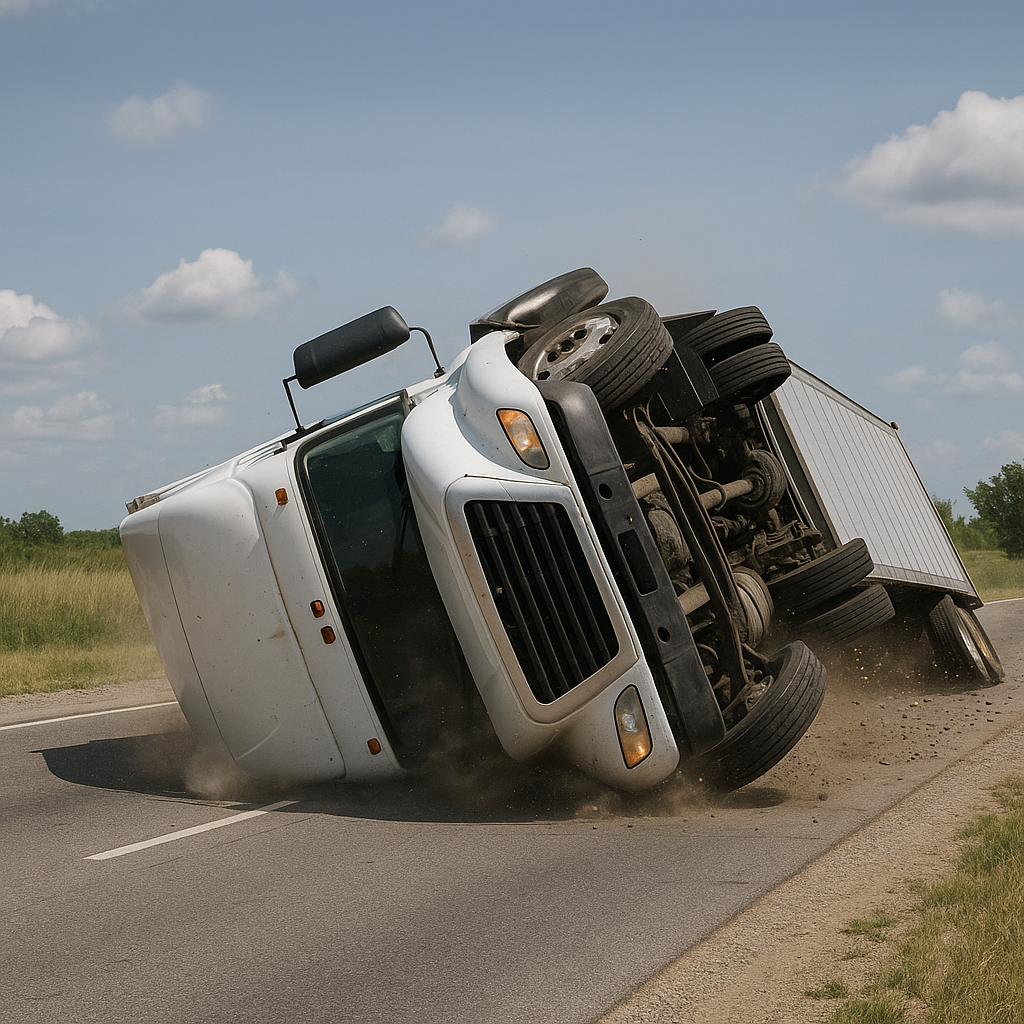
What Happens During a Truck Rollover
A truck rollover is a type of collision in which a large commercial vehicle, such as a tractor-trailer or semi-truck, tips over onto its side or roof. These incidents can occur on highways, rural roads, or urban streets, and they often involve a single truck rather than a multi-vehicle crash. The truck rollover process typically starts when a vehicle loses its balance due to factors such as abrupt steering, speeding around curves, or shifting cargo. Sometimes weather conditions or road surfaces play a role in destabilizing the vehicle.
During the rollover event, the truck’s high center of gravity contributes to instability. When momentum and physics overcome the vehicle’s balance, the entire body of the truck may tip, sometimes sliding or rotating as it comes to rest. The cargo in the trailer can exacerbate the situation, shifting and adding uneven weight that compounds the rollover movement. As the truck overturns, the cab and trailer may separate or remain connected, and the truck can block several lanes of traffic or even spill cargo onto the road.
Immediate Response and On-Scene Realities
The moments after a truck rollover require a quick and coordinated response from emergency services, first responders, and road crews. Their priorities include securing the area, attending to anyone involved, and assessing the stability of the vehicle and its cargo. Some rollovers may involve hazardous materials, which adds another layer of complexity for response teams.
Drivers and passengers may experience confusion, shock, or disorientation in the immediate aftermath. Traffic is typically rerouted, and bystanders often witness the scene from a distance as authorities work to manage the situation. Recovery efforts focus on making the area safe and preventing secondary incidents, such as additional collisions or fire hazards.
Timelines for Emergency Management
The initial stage after a rollover may last anywhere from minutes to several hours, depending on the conditions and complexity of the crash. Clearing the roadway, securing cargo, and investigating the cause can extend the timeline. In many cases, heavy equipment is used to right the overturned truck, while traffic may remain disrupted for an extended period.
Stabilization and Transportation
Following the immediate response, individuals involved may be evaluated for injuries. Emergency medical personnel assess and provide care on the scene before anyone requiring additional support is transported to nearby facilities. The timeframe for stabilization and transport often depends on the extent of the incident and the number of people involved.
Why Truck Rollover Crashes Tend to Result in Serious Harm
Truck rollover crashes are often severe due to several contributing factors. The sheer size and weight of commercial trucks create significant forces during a rollover event. When a truck overturns, both the occupants and the surrounding environment are exposed to considerable impacts. The cab of a truck has limited reinforcement for overhead collisions, which can make more severe outcomes likely.
Cargo can pose additional hazards if it shifts or escapes the trailer during the rollover process. Certain types of cargo may create obstacles for other road users or pose environmental risks. Surrounding vehicles, if involved, can experience significant damage due to the mass and momentum of the overturning truck.
Physical Forces and Vehicle Structure
A truck’s structural design, intended for carrying loads and maximizing storage, creates a higher center of gravity. This makes commercial vehicles more susceptible to rollovers during sharp maneuvers, sudden stops, or when traveling along curved roads. The mechanics of a truck rollover process often result in substantial damage, both to the vehicle and to other property in the immediate vicinity.
Risks to Occupants and Others Nearby
Those inside the truck face heightened risk due to possible cab deformation and the velocity of the tipping vehicle. Individuals in nearby vehicles or on foot may also be affected if debris or cargo is spread across the scene during the movement of the truck.
Broader Impact on Families and Routine Activities
A truck rollover can influence not only those directly involved but also families, businesses, and communities. In some cases, long detours and extended road closures disrupt daily routines for commuters, delivery schedules, and emergency services. Traffic delays may last for hours, influencing a wide range of people beyond the accident itself.
For families, a truck rollover crash can mean sudden changes in routine and ongoing adjustments. Members of these families may need to provide care or support for those affected, adjust work schedules, or manage new responsibilities at home. Activity at work and school can be impacted when someone is involved in this type of collision.
Effects on Transportation and Local Economy
Beyond the family circle, businesses may experience disruptions in supply chains and delivery schedules. Local governments and road agencies dedicate resources to repair and clear affected roadways, diverting efforts from other projects during the recovery and repair period.
Adjusting to New Routine
Communities may spend weeks or months adjusting traffic patterns or roadways affected by a major truck rollover. People in affected neighborhoods may see an increased presence of transportation officials, repair crews, and law enforcement.
A Quiet Return to Normalcy
The truck rollover process unfolds in several distinct stages, from the event itself to the many forms of recovery that follow. These incidents, while often severe, are addressed by a combination of emergency response, support for those impacted, and the efforts of various agencies to restore daily life. Although the impact may be long-lasting, the eventual goal is to return as smoothly as possible to established routines.