
Why Empty Trailers Roll Over More Easily
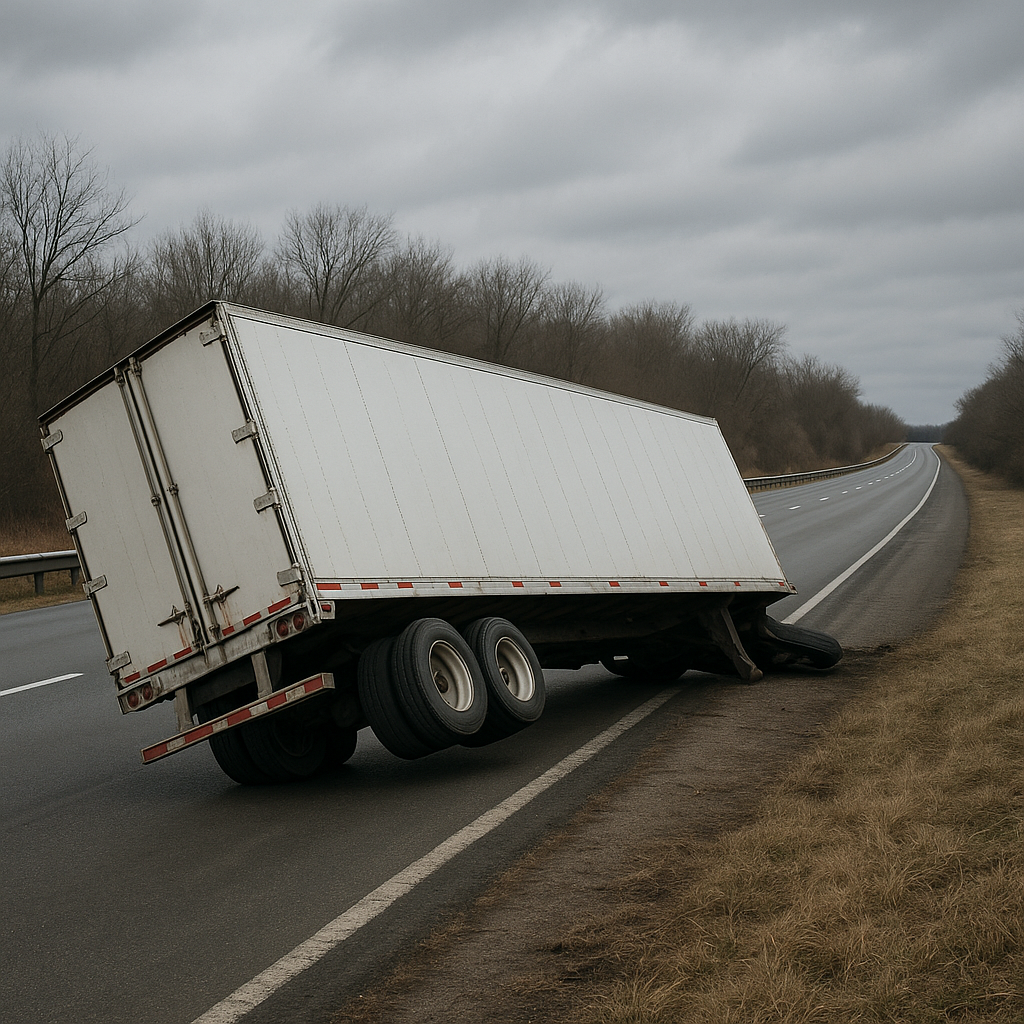
Empty trailer rollover incidents happen more frequently than many realize. These crashes typically occur when a large truck’s trailer, carrying little or no cargo, overturns while traveling on highways, ramps, or during adverse weather conditions. The event might be triggered by a sharp turn, sudden maneuver, or strong side winds. Unlike collisions involving multiple vehicles, these rollovers often feature the tractor-trailer as the sole vehicle in distress, tipping onto its side or even flipping completely. Drivers may be unable to correct the movement once instability begins, resulting in the trailer coming to rest across several lanes or off the roadway.
Factors Making Empty Trailer Rollovers Distinct
Empty trailer rollovers are often more severe due to unique vehicle dynamics. Unlike loaded trailers, which have significant downward force from cargo, empty trailers are lighter and can become unbalanced more easily. The reduction in weight means there is less grip between the tires and the road surface, increasing the risk of tipping when quick adjustments or turns occur.
The tall, box-like shape of most trailers contributes to this instability. With less weight anchoring the unit, powerful crosswinds can push an empty trailer sideways more forcefully than one carrying cargo. This wind energy is absorbed primarily by the trailer’s large, flat surfaces, causing a shift in the center of gravity. Under certain circumstances, the momentum created may overcome the limited friction from the reduced trailer weight, resulting in a rollover.
Roadway design can also play a role. Inclined curves, uneven pavement, and high-speed exit ramps present further challenges. When a trailer is empty, any sharp movement—whether from evasive action, improper speed, or adverse road angles—can redistribute what little mass is available, leading to instability.
Severity of Injuries and Outcomes in Empty Trailer Rollovers
Although the cab and trailer may be the only vehicles affected in many incidents, these rollovers are frequently severe. For the driver, rollover scenarios can be especially dangerous because the cab is exposed to significant impact forces if it is dragged or crushed during the event. Restraint systems provide some protection, yet the rapid rolling motion and shifting of the tractor-trailer combination present significant risks.
The severity increases if the rolled-over trailer blocks multiple traffic lanes or happens at high speed. Vehicles trailing behind may be unable to avoid the obstruction in time, leading to secondary incidents. Additionally, the sheer size of a tractor-trailer means that any crash, even if single-vehicle, involves considerable mechanical forces and the potential for significant damage to surrounding infrastructure.
Ripple Effects on Families and Daily Life
The aftermath of an empty trailer rollover does not solely affect those directly involved. When a commercial truck is unable to complete a trip, substantial delays can ripple through supply chains, causing interruptions for businesses and consumers. For families of professional drivers, worry and logistical disruptions can become part of daily life, especially if a loved one is involved in the incident.
Blocked roads lead to lengthy detours, increasing commute times and complicating school runs and other obligations for the wider community. First responders and recovery crews dedicating hours to clearing the site may have fewer resources available for other emergencies. While not every rollover results in injury, the disruption and uncertainty can still weigh heavily on drivers’ families and co-workers, as they manage new challenges and schedules changed by the delay.
Approaches to Reducing Risks Associated With Empty Trailer Rollovers
Transportation companies and drivers employ a mixture of technology and training to reduce the frequency of these rollovers. Advanced driver assistance systems and stability control mechanisms are increasingly common in modern fleets, designed to help manage traction and maintain better control, especially in changing weather or traffic conditions.
Driver education remains essential. Understanding the risks when operating an empty trailer, such as adjusting speed for curves and ramps and monitoring for crosswind advisories, can help operators make safer decisions on the road. Routine inspections of vehicle components, especially tires and suspension, also serve a preventive purpose, as even minor mechanical issues can increase the likelihood of instability in an already vulnerable empty trailer.
Practical Considerations in Recovery and Prevention
Every empty trailer rollover presents unique logistical challenges, from clearing the scene to assessing equipment damage and ensuring the roadway is safe for traffic to resume. Recovery crews prioritize the safe upright movement of the trailer and repair of any roadway barriers or signs damaged during the incident. Coordination with local authorities ensures that detours and communications with motorists minimize further disruptions.
Reflecting on Empty Trailer Rollover Incidents
Understanding why empty trailers roll over more easily highlights the importance of ongoing attention to road safety and vehicle maintenance. By examining the various mechanical and environmental factors contributing to these crashes, stakeholders across the trucking industry can take steps to support safer travel. While the direct consequences may be felt most acutely by those immediately involved, the broader impacts touch families and daily routines across entire communities.