
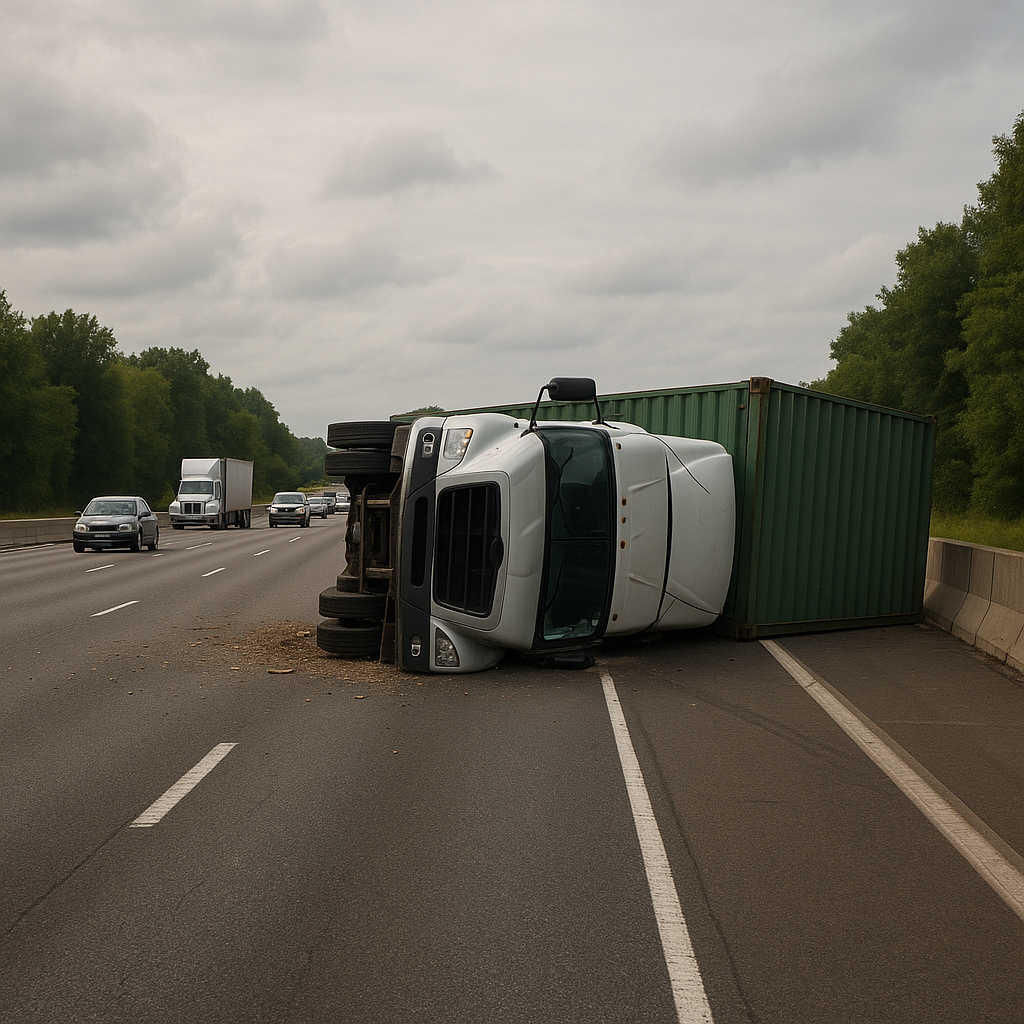
Why Rollovers Block Highways for Hours
Highway rollovers involve large commercial trucks or passenger vehicles flipping onto their side or roof, frequently coming to rest across multiple lanes. When these incidents occur, they often result in full or partial blockages, causing extended closures and significant highway delays. Rollovers can involve a single vehicle losing stability or multiple vehicles if cargo spills, but the disruption to traffic is consistent in most cases.
How Rollovers Disrupt Traffic Flow
Rollover incidents not only obstruct travel lanes, but the presence of the vehicle on its side or roof complicates recovery efforts. The weight and size of commercial trucks, in particular, require specialized equipment to move safely. Even if a rollover involves a passenger car, debris, spilled fluids, and damaged barriers can contribute to a more complex and time-consuming recovery.
Dangers Inherent to Rollover Accidents
The impact forces and unpredictability of rollovers are often associated with serious outcomes. Vehicles, especially high-profile trucks or those carrying cargo, are susceptible to tipping during sharp turns, sudden maneuvers, or in adverse weather conditions. Because rollovers typically occur at highway speeds, the risk of severe injury or worse is high due to rapid deceleration and the multiple points of impact as the vehicle comes to rest.
Rollover accidents sometimes damage fuel tanks or cargo containers, raising concerns about hazardous material spills. Even without hazardous cargo, the scattered contents and vehicle parts create additional dangers, requiring thorough safety checks before lanes can reopen.
Beginning the Recovery Process on Scene
After a rollover, emergency responders prioritize safety and assessment as their first steps. The initial focus is on securing the scene and addressing any immediate hazards, such as potential fires, leaks, or further collisions from oncoming traffic. Traffic may need to be rerouted, and a safe perimeter is usually established to keep both drivers and responders out of harm’s way.
Safety Assessment and Environmental Checks
The process begins with teams checking for risks such as hazardous materials or unstable loads. If the rolled vehicle is transporting chemicals, fuel, or other dangerous substances, specialized crews are required to contain and neutralize the threat. In these cases, the delay extends well beyond the typical accident response, as environmental safety is critical before any recovery can proceed.
Stabilizing the Rolled Vehicle
Stabilization is a necessary precaution to prevent further motion of the overturned vehicle. This may involve securing the vehicle with specialized supports or lifting equipment so recovery crews can safely work around and eventually upright the truck or car. For trucks, this stage is particularly complex due to the size and weight involved.
Clearing the Highway: Step-by-Step Approach
Once safety is established, crews begin the task of removing the obstructing vehicles and debris. Rollovers, especially those involving large trucks, often result in extensive cleanup needs. Cargo may need to be offloaded, loaded onto different vehicles, or moved piece by piece. Structural damage to guardrails or road surfaces often needs at least temporary repairs before reopening.
Heavy Equipment and Removal Operations
Typically, large tow trucks or cranes are brought in to lift and right overturned vehicles. This operation takes time because the risk of further damage or spills remains throughout. Traffic flow may be stopped completely during lifting operations, adding to the overall duration of the highway closure.
Debris and Cargo Management
When cargo spreads onto the highway, crews must gather and clear it all, sometimes manually. Hazardous cargo may require careful documentation or additional procedures to ensure safety. Even once vehicles are uprighted and removed, scattered debris—including glass, parts, and fluids—must be addressed thoroughly.
The Broader Ripple Effect Beyond the Scene
Highway rollovers can significantly disrupt the routines of those caught in resulting traffic. Commuters may face hours of unplanned delays, potentially missing work or other commitments. For many, travel plans are altered, and the impacted region may experience increased congestion on detours and local roads.
Long-Term Impacts on Families and Daily Life
Families affected by a rollover incident often contend with the immediate disruption, but also face the aftereffects of missed obligations, extended travel times, and rescheduled plans. Commercial drivers see delivery schedules delayed, while emergency responders devote significant time and resources to each event, drawing focus from other potential incidents in the area.
Community and Infrastructure Recovery
Following a major highway closure, traffic resumes only after authorities ensure the roadway is safe. In some cases, longer-term repairs to barriers, signage, or the road surface are needed, potentially causing additional, intermittent lane closures in the days or weeks that follow.
Quiet Conclusion: Understanding Rollover Highway Delay
The process of resolving highway rollovers is complex and multi-faceted. Each step, from initial safety assessments to the removal of debris and hazardous materials, requires time and precision. These incidents highlight how one event can cause systemic delays, impacting not only traffic flow but the broader community’s daily life. Understanding the challenges involved helps explain why rollover highway delays frequently last for hours, even with a dedicated response.