
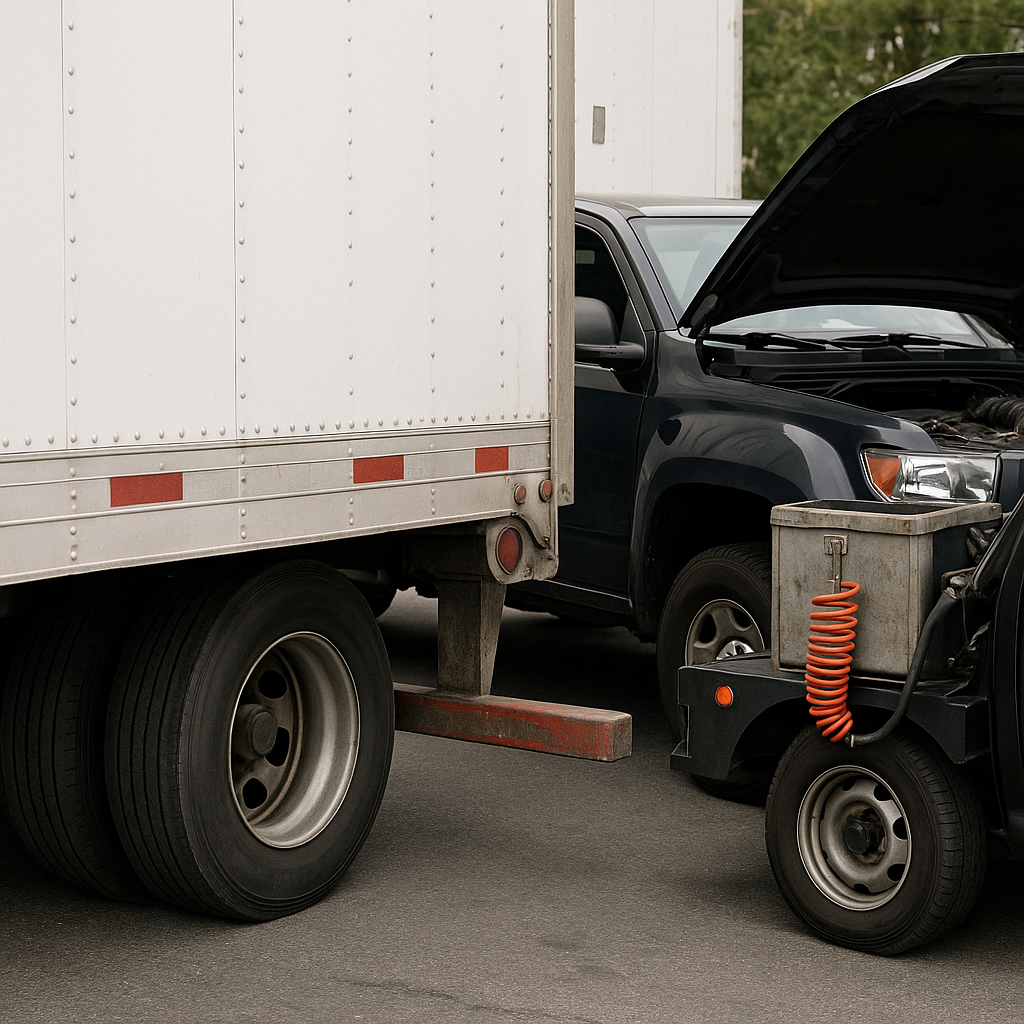
Why Trailer Maintenance Affects Underride Risk
Trailer underride crashes rank among the most catastrophic roadway incidents, often resulting in serious injury or fatality. At the root of these tragedies is not just their suddenness but how easily the protective features of a trailer can fail without proper upkeep. The link between trailer maintenance and underride risk is an interaction of mechanical systems, environmental exposure, and the high-stakes realities of heavy road transport. Understanding this connection clarifies why rigorous care of trailers is not merely a regulatory checkbox—it is a matter intricately tied to crash outcomes.
Trailer Systems and the Mechanics of Underride Prevention
An underride incident occurs when a passenger vehicle slides partway or fully beneath a trailer, typically the rear or side. Trailers are usually equipped with underride guards—metal barriers mounted at the lower rear and sides—a safety feature designed to stop a car from continuing its path under the trailer during a collision.
The effectiveness of these guards hinges on regular maintenance, from structural checks to parts replacement. Corrosion, weld failures, and loose fasteners can reduce their integrity or detach them completely. Many rear underride guards have load-bearing brackets, multiple weld points, and cross-members, all of which must remain intact to withstand the impact forces exerted in a crash.
Lighting and conspicuity markings are equally vital. Reflective tape or lighting systems ensure that drivers spot a trailer at night or in low-visibility conditions. Electrical failures, broken lamps, or worn reflective strips can make a trailer almost invisible in darkness, increasing the odds of an underride event.
How Maintenance Practices Influence System Performance
Trailer guards endure significant stress throughout their service life. Daily vibration, impacts with loading docks, episodes of bottoming-out on uneven surfaces, and exposure to road salts all contribute to gradual degradation. Each of these factors interacts with trailer maintenance practices, dictating how well the underride protection system responds when needed.
Weld integrity can be compromised over time. Cracks may form, often invisible to casual inspection, which can propagate during years of service. Without targeted maintenance checks, these cracks remain undetected, and the guard’s structural capacity diminishes. Corrosion is an ever-present threat. Moisture, de-icing chemicals, and environmental pollutants cause rust and weaken steel, attacking both the underride guard itself and its mounting points.
Loose or missing bolts pose another risk. Guards must be securely fastened to absorb the shock of a crash. If routine maintenance overlooks loose hardware, even a well-designed guard may break away under impact.
Lighting and conspicuity systems are vulnerable as well. Wiring can fray, connections may corrode, bulbs or LEDs can fail, and reflective tape may peel off due to age and exposure to the elements. Without ongoing attention, these failures add up: a trailer might offer little to no warning to other motorists, particularly at night or in bad weather.
Trailer Maintenance Underride Risk: Real Crash Consequences
The condition of a trailer’s safety systems is put to the test during real-world collisions, often with devastating results if maintenance has lapsed. If a guard’s structure is weakened by rust, faulty joints, or missing bolts, it will not stop a passenger vehicle from riding under the trailer. In these instances, the entire guard may shear away or crumple, failing to redirect the energy of the crash or protect those inside the passenger vehicle.
Historical crash investigations routinely demonstrate that poorly maintained underride guards do not function as intended. Loosened, separated, or rust-compromised guards have failed during impacts that otherwise would have been survivable. The aftermath often reveals sheared guard assemblies or telltale rust trails at break points, providing evidence of maintenance deficiencies.
Failings in lighting and reflectivity compound the risk by increasing the likelihood of a collision in the first place. When a trailer goes unnoticed at night because its lights or reflectors are inoperative or degraded, the chance of a rear-end impact rises—the very situation the guard is designed to address. This places the focus on maintenance not just as a safeguard for maintaining the strength of guards but as a holistic strategy for reducing crash risk at every stage.
Another real-world complication is the diversity of trailers on the road. Some units, especially older or heavily used ones, accumulate wear and tear that outpaces the minimum checks required by regulations. In busy freight operations or with tight turnaround schedules, operational demands may lead to shortcuts or delays in maintenance, unintentionally heightening underride risk with each trip.
Contextualizing Underride Risk and Trailer Maintenance
Viewed in context, the relationship between trailer maintenance and underride risk is a matter of systems integrity under stress. The specific engineering of underride guards, conspicuity features, and structural fastenings makes them sensitive to the rigors of daily trucking and heavy use. Maintenance—whether performed meticulously, neglected, or somewhere in between—has a direct, quantifiable effect on their real-world performance.
Data from crash testing and on-road accident investigations continually points to maintenance as a controlling influence over underride outcomes. A trailer can be compliant on paper, but degraded in practice due to lapse in inspection routines or deferred repairs. The reality of logistics means even small lapses can become critical under the sudden, immense forces of a crash.
In sum, the interplay between trailer maintenance and our ability to prevent or survive underride events is complex but well-understood: the performance of underride protection systems reflects their state of repair. Roadway safety is shaped not only by regulation or design but by the daily, practical upkeep required to keep these systems working as intended. While ongoing technological advancements may influence the next generation of trailers and guards, the fundamentals of maintenance remain at the core of underride risk. The ongoing relationship between mechanical reliability and crash outcomes is ever-present, with consequences evident far beyond the shop floor or inspection lane.