
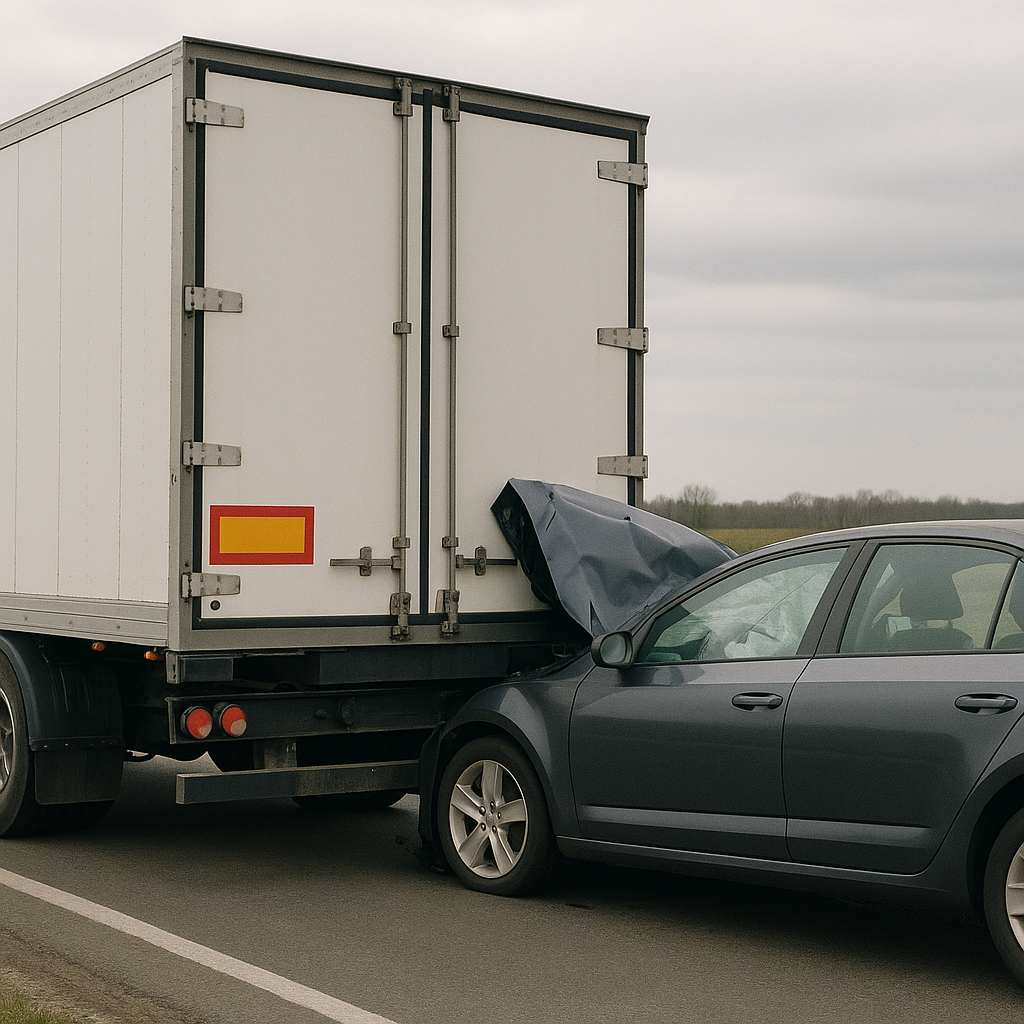
Why Trailer Rear Design Matters in Crashes
The transportation of goods by road relies heavily on trailers. These vehicles are essential components of the logistics network, often carrying everything from consumer products to industrial equipment. However, with their sheer size and presence on highways, trailers are frequently involved in road accidents. In these incidents, the design of a trailer’s rear section can have a significant influence on the outcomes of crashes. Trailer rear design is not just an aspect of vehicle engineering—it is a critical factor that shapes the safety of all road users.
Physical Structure and Impact Dynamics
Anatomy of a Trailer’s Rear
The rear section of a trailer typically includes features such as underride guards, tail lamps, reflectors, and bumper configurations. Each element serves both a structural and safety function, with varying designs depending on manufacturers and regulations. The underride guard, also known as a rear impact guard, is one of the most prominent safety installations, designed to prevent smaller vehicles from sliding underneath the trailer during rear-end collisions.
Forces During a Crash
When a vehicle collides with the rear of a trailer, the impact force is concentrated at the contact point. The height, strength, and structure of features such as underride guards determine how this force is distributed. If the trailer’s rear is inadequately designed, passenger vehicles can underride the trailer, leading to catastrophic intrusion into the car’s occupant space. Modern designs attempt to mitigate this by maximizing energy absorption and creating barriers that engage more of the colliding vehicle’s front structure.
Engineering Limitations and Safety Considerations
Variability in Standards
The design of trailer rears is heavily influenced by national and regional safety standards. Not all regions enforce the same rigor, leading to disparities in rear impact protection. In some cases, regulatory requirements are minimal, resulting in underride guards that are either too weak or improperly positioned.
Material and Construction Constraints
Manufacturers must balance weight, cost, and function when constructing trailer rears. Use of steel provides strength but adds significant weight, while lighter materials may compromise on impact resistance. The height of the rear guard needs to match those of the most common passenger vehicles on the road for optimal safety. However, trailers are often designed to maximize cargo capacity, which can take precedence over safety features in some cases.
Incompatibility With Diverse Vehicles
Roadways are shared by various kinds of vehicles, each with different bumper heights and crash dynamics. Trailer rear designs that work for one type of car might fail for another, especially for smaller sedans or sports cars. This incompatibility leaves gaps in protection that become evident in specific crash scenarios.
Real-World Impact of Trailer Rear Design in Crashes
Underride Accidents and Injury Severity
One of the most devastating outcomes associated with poor trailer rear design is the underride crash. In an underride incident, a car slides underneath the trailer, allowing the trailer’s rear to intrude into the passenger compartment. This leads to severe injuries or fatalities, often to the occupants in the front seats. Studies and crash reconstructions highlight that properly designed guards significantly lower the incidence and severity of such crashes.
Secondary Collision Hazards
When a rear design incorporates robust underride guards, the energy from a crash is more likely to be absorbed or redirected. This may mean the difference between a survivable accident and a tragic one. Conversely, weak or absent guards result in higher rates of intrusion and can compromise not only vehicle occupants but also lead to multi-vehicle pileups due to unpredictable crash dynamics.
Influence on Emergency Response
The design of the trailer rear also affects how first responders approach rescue operations. A poorly designed rear can make it more difficult to quickly access vehicle occupants trapped in a crash. The presence or absence of protruding structures, guardrails, or sharp edges directly impacts the time and tools required for extrication.
Data From Crash Investigations
Crash data consistently show that trailers with modern, reinforced rear designs reduce the number of fatal underrides. In contrast, older trailers lacking these features are overrepresented in severe crash statistics. Investigations often reveal that differences in design—such as the height and rigidity of the guard—can be traced directly to the mechanisms of injury and structural collapse observed in real accidents.
Reflecting on Trailer Rear Design and Road Safety
The rear design of a trailer is much more than an aesthetic or functional choice for cargo purposes. It is a focal point in the complex interplay between engineering, safety standards, practical limitations, and the realities faced on roads. Trailer rear design determines how crash energy is managed, how risks are distributed among different vehicles, and ultimately, how survivable a crash might be for those involved.
As research and incident analyses continue to uncover the relationships between trailer design and crash outcomes, awareness of these issues within the engineering and regulatory communities grows. Advances in materials, better understanding of crash kinematics, and changes to safety regulations are likely to continue shaping the future of trailer rear design. The goal is an ongoing reduction in fatalities and injuries, informed by a clear understanding of both the limitations and the potential of engineering solutions.
Within this context, the importance of trailer rear design in crashes is defined not only by past incidents but also by the ongoing efforts to adapt and innovate, aiming for a safer future on the world’s roads.