
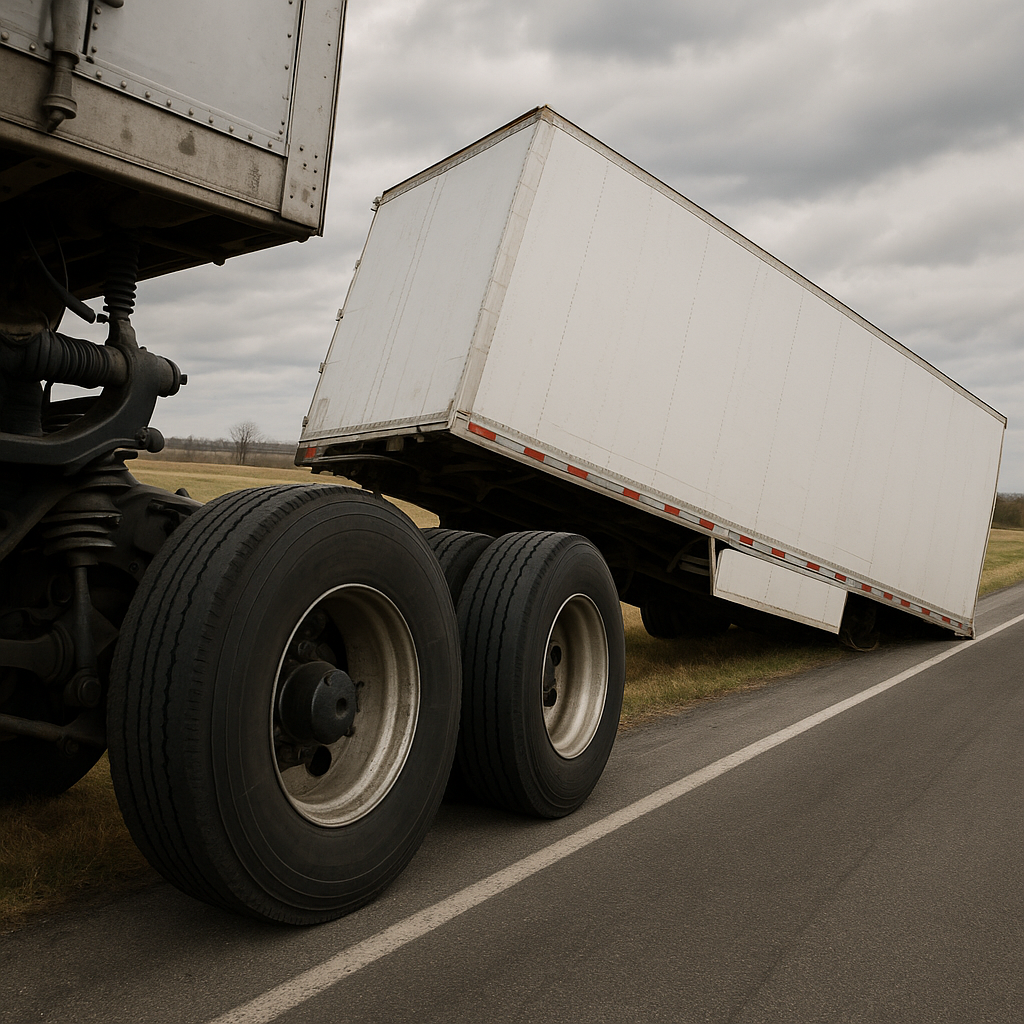
Why Trailer Suspension Issues Increase Rollover Risk
When heavy trailers travel the roads, they rely on their suspension systems to maintain stability, carry loads safely, and absorb bumps or undulations in the pavement. The integrity of this system plays a crucial role in preventing accidents and ensuring that the trailer responds predictably to steering, braking, and load changes. Understanding the relationship between trailer suspension issues and rollover risk is vital for appreciating the mechanics of heavy vehicle safety.
Trailer Suspension Systems and Their Function
The Essential Role of Suspension in Stability
Trailer suspension refers to the collection of springs, shock absorbers, and linkages connecting a trailer to its wheels. The primary purpose of this system is to cushion the vehicle from road irregularities and to keep the tires in consistent contact with the surface. This contact is critical for maintaining grip and control, particularly when a trailer is loaded to capacity or traveling at speed.
Proper suspension ensures that weight is distributed as evenly as possible across all tires. It also limits excessive body roll, uncontrolled bouncing, and swaying. Trailers with multi-axle systems rely even more heavily on their suspension components, since poor weight distribution can compromise the handling characteristics not just of the trailer, but of the tractor pulling it.
Breakdown of Suspension Problems and Their Effects
Suspension issues in trailers can come in various forms: worn shock absorbers, broken leaf springs, degraded bushings, or even overloaded axles. Any degradation or imbalance in these parts lessens their ability to absorb energy from bumps and resist forces acting on the trailer as it maneuvers the road.
When these problems arise, the suspension may fail to keep all tires planted. Tires may lose contact with the road, or certain axles might bear more load than others. This imbalance can cause the trailer to tip more easily during sharp turns, abrupt lane changes, or sudden stops, magnifying the risk of a rollover event.
How Suspension Malfunctions Increase Rollover Potential
Suspension Issues and Dynamic Instability
The primary function of a trailer’s suspension is to absorb movement and stabilize the load. When this system malfunctions, the dynamics of the trailer change. For instance, weak or broken springs can cause the trailer’s bed to sag on one side, lowering the critical rollover threshold. Similarly, if shock absorbers are worn out, the trailer may begin to sway excessively, especially at higher speeds or during abrupt actions by the driver.
Dynamic instability is another consequence of poor suspension. A malfunctioning suspension is less able to counter the centripetal forces generated in curves or during avoidance maneuvers. As the trailer leans excessively, its center of gravity moves outward, inching closer to the tipping point. This subtle shift can make all the difference in a critical moment, such as during emergency braking or evasive steering to avoid an obstacle.
Load Transfer and Weight Shifts
Another important factor is the way that suspension issues facilitate unfavorable weight transfer. In a well-maintained suspension, loads are transferred smoothly between axles as the trailer corners or brakes. With parts worn or broken, this transition becomes jerky or uneven. Sudden shifts in weight can unload one set of tires while overloading another, reducing available traction and creating a prime environment for rollover.
The higher the load or the taller the cargo, the greater the risk. Trailers carrying top-heavy products—like stacked pallets or machinery—are particularly susceptible to rollover if suspension issues disrupt the evenness of the ride and amplify the effects of weight transfer.
Oscillation and Trailer Sway
Oscillation, also known as “trailer sway,” is closely linked to suspension performance. Deficient suspension components allow oscillations to build up, making it harder for the driver to recover control. If the suspension cannot absorb and dampen these oscillations, the movement can grow uncontrollably, especially in windy conditions or when passing large vehicles. Combined with suboptimal load distribution, this can cause rapid swings in the trailer’s body position, adding to the potential for a rollover.
Real-World Crash Mechanics and the Influence of Suspension Failures
Crash Dynamics and Instigators
In real-world scenarios, trailers are exposed to a host of dynamic forces that all interact with the suspension system. When a vehicle makes a sudden steering correction—perhaps to avoid a collision or lane intrusion—the trailer’s stability is tested. A compromised suspension greatly increases the likelihood that the trailer’s mass will shift in a way that overcomes the resisting force of the tires on the road. The result may be a quick and dramatic rollover.
Road conditions play an amplifying role as well. Uneven pavements, potholes, or unexpected debris require the suspension to respond instantly. With worn components, the trailer’s tires may lose contact with the ground just as the driver needs maximum adhesion. In such moments, the ability (or lack thereof) of the suspension to keep the wheels grounded can determine whether the trailer remains upright or tips over.
Rollover Initiation and Progression
Once initiated, a rollover can progress rapidly, sometimes in less than a second. An imperfect suspension can kickstart this progression, particularly on a curve or when traveling downhill. If the trailer dips or leans more than it should, the shift in the center of gravity can exceed the design limits of the vehicle. Unlike other mechanical problems, where failure results simply in loss of movement, suspension failure has the potential to transform a routine maneuver into a catastrophic rollover.
Empirical Observations from Crash Analysis
Crash investigators often note a correlation between trailer suspension issues and higher incidence of rollovers in commercial vehicle accidents. Detailed examinations reveal that pre-existing suspension damage may go undetected until a sudden maneuver tests the limits of the system. This means that even minor flaws—such as small leaks in air suspension systems or barely-worn shock absorbers—can become major contributors under the right (or wrong) circumstances.
Moreover, road safety data highlights that rollovers frequently occur where grading, tight corners, or highway exits challenge the balance of heavy rigs. When tire grip fails and lateral momentum overwhelms the suspension, the rollover threshold drops sharply, sometimes below the expected safety margin set by the trailer’s design.
The Cumulative Impact of Suspension Degradation
The connection between trailer suspension issues and increased rollover risk stems from the fundamental role that suspension plays in maintaining the dynamic stability of the vehicle. Each component—from shocks to springs—serves as a safeguard against loss of control. Any compromise in this system increases vulnerability to events that might otherwise be uneventful.
In transportation environments where heavy loads, varied road conditions, and unpredictable traffic situations are the norm, the condition of a trailer’s suspension takes on critical importance. The increased rollover risk associated with suspension failure is not simply theoretical; it is observed in crash statistics and in the mechanical analysis of rollover incidents. This relationship underscores the importance of robust suspension systems in ensuring the safety and reliability of heavy trailers on the road.