
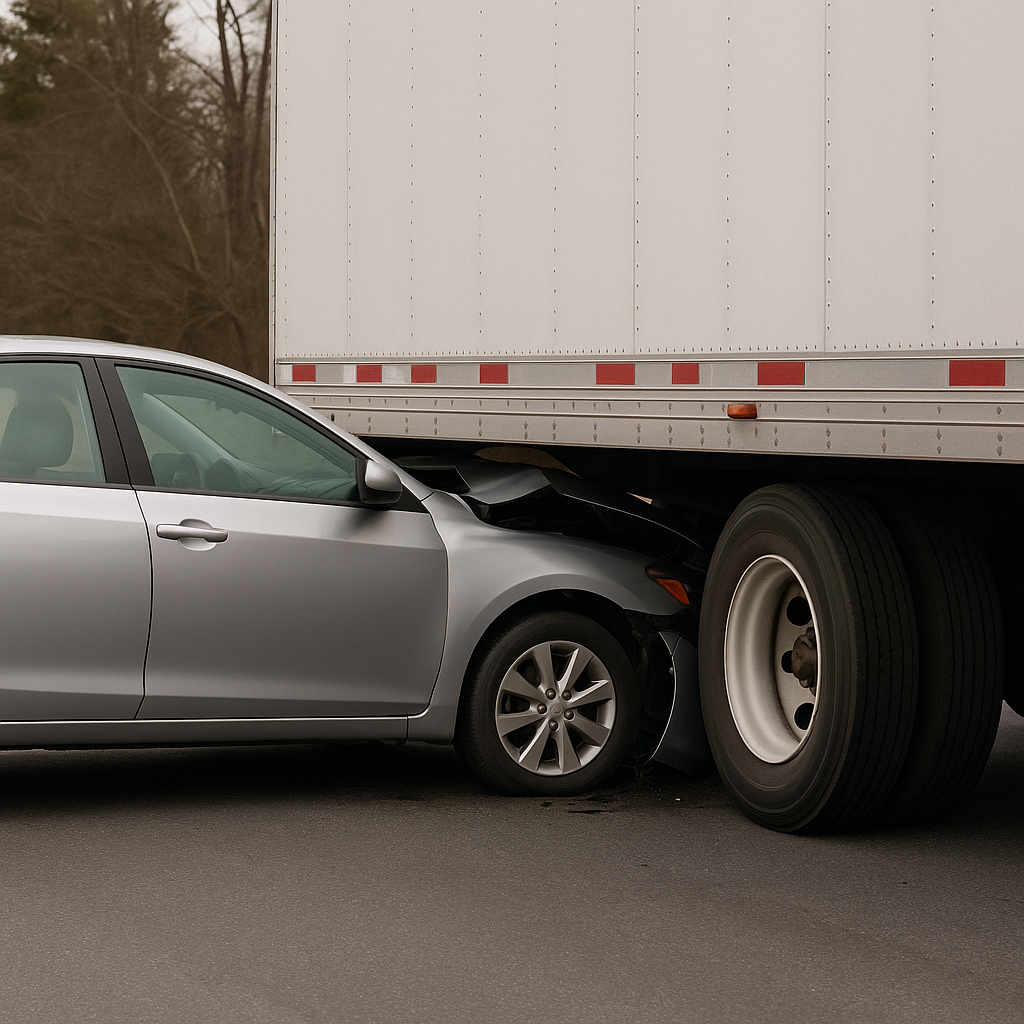
Why Trailers Create Underride Risks
Trailers play a crucial role in freight transport, moving goods efficiently across highways. Yet, these large vehicles introduce unique safety concerns—one of the most significant being the trailer underride risk. An underride occurs when a smaller vehicle slides under the rear or side of a trailer during a collision. The consequences can be catastrophic, often resulting in severe injuries or fatalities. Understanding why trailers pose such risks is essential for anyone interested in transportation safety, fleet operations, or automotive engineering.
Trailer Design: How Physical Structure Contributes to Underride
The Height Mismatch
The construction of trailers is largely dictated by their intended freight loads and industry standards. Typically, the undercarriage of these trailers sits higher off the ground compared to the bumpers or structures of passenger vehicles. This gap often ranges from 40 to 56 inches above the ground.
When a car collides with a trailer, the energy-absorbing structures like crumple zones and bumpers can slide beneath the trailer floor. This forces the car’s cabin to sustain the brunt of the impact, significantly increasing the chance of severe injuries. Unlike collisions with platforms shaped like passenger vehicles, trailer impacts offer little resistance to decelerate the smaller car safely.
Flat, Rigid Surfaces
The rear and side faces of trailers are typically flat, with limited energy-absorbing properties. For transport efficiency, these surfaces lack contours, tapering, or cushioning found in modern passenger vehicles’ bumpers. If a vehicle makes contact, especially in low-light or poor weather, the absence of physical features that might catch or stop a vehicle’s forward movement results in a much higher likelihood of an underride event.
Side underride is especially problematic because the side of a trailer often lacks even minimal barriers. Rear underride risks have been somewhat mitigated in certain regions by requirements for rear impact guards, but these are not always present or strong enough to prevent severe underride in high-speed crashes.
Open Space Beneath the Trailer
Underneath most trailers, there is open space designed to accommodate cargo, axles, and structural supports. Unlike the solid, comparatively low clearance under most vehicles, this design leaves a broad, accessible area that smaller vehicles can enter during a collision. It is this combination of height and open architecture that leads to a high trailer underride risk.
Real-World Crash Dynamics: How Underride Happens
Differences in Vehicle Construction
Passenger vehicles are engineered with crash zones and bumpers that are optimized for impacts with similarly sized vehicles. These features aim to distribute crash forces, allowing the passenger compartment to remain intact as much as possible. A trailer’s rear or side fails to align with these protective systems. Instead of compressing the front end, a car can pass underneath the trailer so that the windshield or roofline directly impacts the trailer’s body.
A high trailer undercarriage means crash forces bypass the energy-absorbing sections of the car and target the payload area, often where vehicle occupants are located. In side underride crashes, the rigid edge of the trailer can even breach into the passenger compartment.
Speed, Visibility, and Reaction Time
Underride collisions commonly occur in situations with limited visibility or abrupt trailer stops. At night or in fog, drivers may not perceive a trailer in the roadway until the last second, especially if trailer markings are weathered or missing. Trailers stopped on highways, making slow turns, or crossing traffic present a challenge for approaching vehicles. At high speeds, even a split-second delay in recognition minimizes the opportunity for braking, elevating the risk of the front end sliding under the trailer.
In rear underride crashes, even when guards are present, if they do not withstand the force of impact or are mounted too high, the protection may be inadequate. Side underride guards are even less commonly installed, though their absence leaves a gaping vulnerability during crossing or turning accidents.
The Challenge of Mixed Road Environments
On roads shared by vehicles of varying size, weight, and speed, trailers stand out as some of the tallest and least crash-compatible obstacles. While passenger cars are designed to “meet” other passenger cars in the event of a crash, the incompatibility of structure and scale between cars and trailers means smaller vehicles are always more susceptible to underride. This discrepancy becomes more significant during multi-vehicle pileups or chain-reaction crashes, where one car may be forced into the space beneath a trailer by another impact.
Why Trailer Underride Risk Matters
Severity of Outcomes
Trailer underride crashes lead to some of the most severe consequences on the road. When the front of a car travels under a trailer, the outcome can be devastating for the vehicle occupants. The windshield and roof provide little resistance compared to the car’s crumple zones and bumpers, allowing the trailer to intrude deeply into the cabin. Such intrusions often bypass safety features like airbags and seatbelts, rendering them ineffective.
Because the impact occurs so high on the vehicle, the potential for fatal head and upper body injuries rises dramatically. Survivors of underride crashes may face significant long-term consequences due to the trauma sustained in such incidents.
Prevalence Despite Technological Advances
While modern vehicles have made remarkable advances in safety, these improvements do not translate effectively to crashes involving trailers. Automatic emergency braking, improved crash sensors, and reinforced passenger compartments protect against impacts with conventional vehicles and barriers, but do little to prevent a car from passing under a trailer. Trailer underride risk remains elevated even with the most cutting-edge onboard safety technology.
Industry and Regulatory Implications
The trailer underride issue also influences how policymakers, crash investigators, and trucking professionals view transportation safety. It brings attention to gaps between vehicle types and raises questions about how to engineer a road environment where both commercial and passenger vehicles can coexist without creating unnecessary risks. From structural reinforcement and lighting to reflective markings and improved trailer guards, trailer underride risk prompts ongoing assessment of how trailers are built and used.
A Complex Risk in a Shared Transport System
Trailers are indispensable to modern logistics, but the way they are designed and integrated into road systems unavoidably introduces underride risks for passenger vehicles. The height disparity, flat rigid surfaces, lack of undercarriage barriers, and real-world driving scenarios where visibility or reaction time is reduced all contribute to a persistent safety challenge.
Understanding the ways in which trailers create underride risk sheds light on a critical issue facing mixed-vehicle roadways. It underscores the importance of continued study, engineering innovation, and awareness as roadways evolve and technology advances. Ultimately, the existence of trailer underride risk highlights the complexities of transportation systems where diverse vehicle types must interact safely under all conditions.