
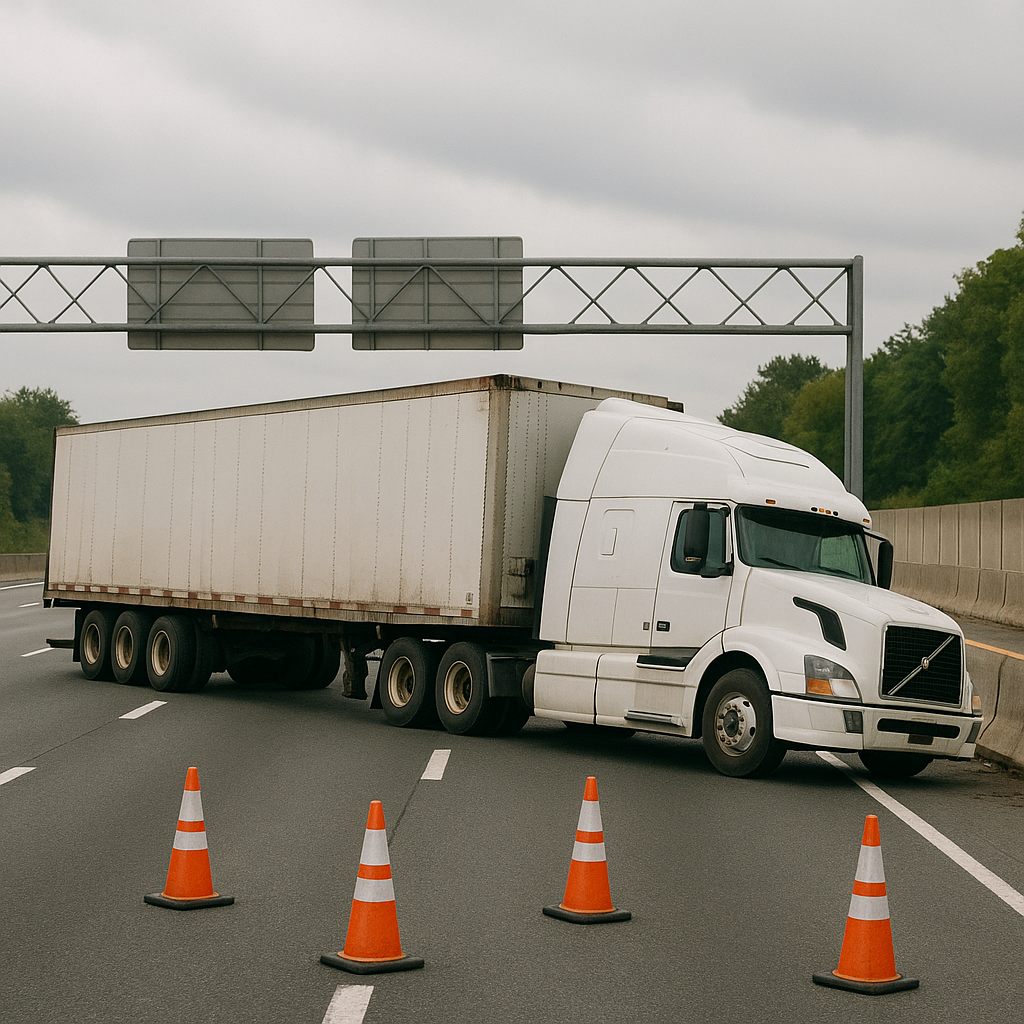
Why Truck Rollovers Cause Long Highway Closures
Truck rollovers are a type of accident commonly seen on highways and major roadways. These incidents occur when a large commercial truck loses balance and tips over, often coming to rest on its side or roof. Such situations are most frequent on sharp turns, in high-wind conditions, or when trucks are carrying heavy or unbalanced loads. Rollovers may block multiple lanes and sometimes involve other vehicles. While response agencies are trained for these scenarios, they can be challenging to resolve quickly.
Understanding the Nature of a Truck Rollover
When a truck experiences a rollover, the vehicle’s size and weight become significant obstacles for both motorists and responders. Tractor-trailers and other large trucks can span the full width of several lanes when overturned. This immediately leads to the closure of affected highway sections. Hazards like spilled cargo or leaking fuel may also be present, complicating the initial assessment and response.
Rollover incidents can develop with very little warning. Drivers may lose control due to sudden maneuvers, tire blowouts, mechanical failures, or adverse weather, resulting in the truck tipping sideways. Once down, the vehicle can obstruct traffic from multiple directions, particularly on multi-lane highways or in construction zones.
The Severity and Risks Involved
Truck rollovers are often severe due to the forces at play and the amount of mass involved. The risk to life is considerable for the truck driver and nearby motorists, especially when hazardous or flammable materials are being transported. The energy released in a rollover can lead to substantial deformation of the vehicle, and sometimes to chain-reaction collisions involving other vehicles on the road.
Due to these factors, emergency responders anticipate severe consequences and approach such scenes with extra caution. Specialized rescue teams may be necessary to address both passenger safety and potential environmental hazards from spilled freight or vehicle fluids.
Response Strategies and Safety Protocols
Clearing a highway after a truck rollover is a complex and cautious process. Responders secure the area to prevent secondary accidents, assess for leaks of hazardous material, and provide aid to anyone with injuries. Traffic flow is often disrupted for hours as a result.
Efforts to upright or remove the truck require heavy machinery, such as tow trucks equipped for large-scale recovery. Before recovery can begin, the cargo may need to be offloaded to reduce the truck’s weight, which slows proceedings even further. If the cargo itself poses a risk, such as hazardous chemicals, specialized containment and cleanup teams are required.
Road surfaces are inspected for damage after the truck is cleared. Sometimes repairs are required before reopening to ensure safety for motorists. Throughout these stages, authorities communicate updates to minimize confusion and frustration for those affected by the closure.
Broader Impacts on Daily Life and Traffic
The effects of a rollover highway closure extend beyond the crash scene. Other motorists may face long detours and increased travel times, particularly on busy routes or during peak hours. Public transportation, delivery schedules, and emergency services can all be delayed due to inaccessible stretches of highway.
Heavy commercial vehicles often operate on strict schedules, so closures can also impact supply chains and local businesses. Residential communities near the incident may experience unusual traffic as drivers seek alternative routes. The combined effect is a reminder of how interconnected transportation networks are—and how a single incident can ripple across an entire region’s daily routine.
Families of those involved in rollovers often experience sudden disruption, particularly if injury or extended closure requires an unexpected change in plans. Such crashes highlight the unpredictability of road travel and the wide-ranging implications for everyday life.
Steps Toward Recovery and Reopening
While the removal of an overturned truck marks a milestone, the recovery process does not conclude there. After the damaged vehicle and any debris are cleared, crews ensure the safety and integrity of the roadway itself. Inspection teams look for structural or surface damage that might affect future traffic.
Work continues as responders address environmental concerns, especially if fuel, oil, or other substances have escaped during the crash. Cleanup crews use specialized equipment and materials to contain and remove contaminants, aiming to protect both motorists and nearby ecosystems.
Authorities only reopen affected highways once all safety standards are confirmed met. Ongoing monitoring may continue for days after the initial reopening to track longer-term effects or additional repairs required.
Final Considerations for Highway Safety
Truck rollovers represent more than isolated accidents. Their effects include prolonged highway closures, complex recovery operations, and lasting disruptions for countless people. Each event underscores the reliance of modern transportation on the safe and effective management of both vehicles and cargo.
Continued improvements in vehicle technology, driver training, and emergency response help to reduce the frequency and impact of such incidents. Ongoing education about road safety for all drivers remains a key factor in minimizing risks and ensuring that highways function smoothly, even in the face of occasional emergencies.