
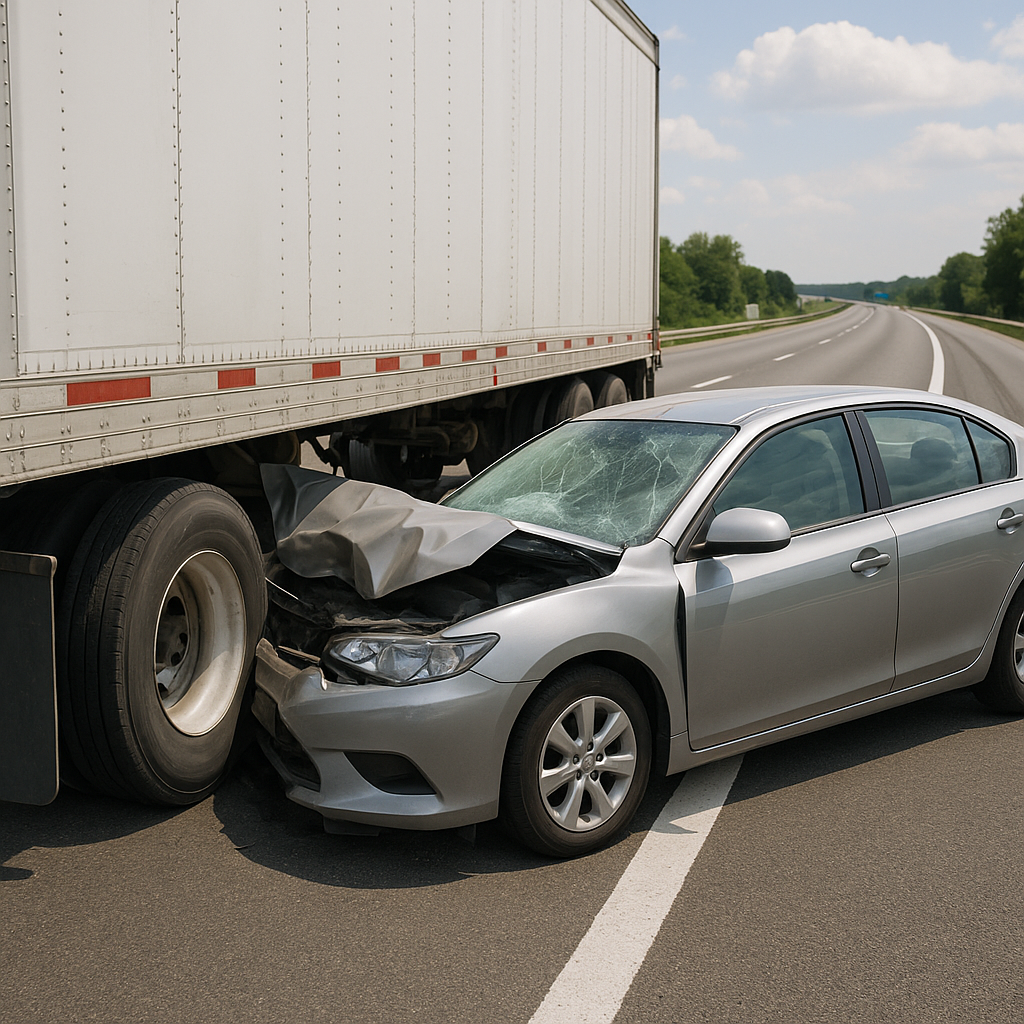
Why Underride Crashes Happen at Highway Speeds
Underride crashes are a specific type of truck-involved accident most commonly occurring at highway speeds. In these incidents, a passenger vehicle slides underneath the rear or side of a large commercial truck or trailer. This often happens when faster-moving vehicles are unable to stop or avoid a slower or suddenly stopped truck, especially on highways where travel speeds are considerably higher. These types of crashes have become a critical concern for road safety experts and transportation authorities.
Circumstances Leading to Highway Speed Underride Incidents
There are several core factors that contribute to underride crashes on highways. One frequent scenario occurs when a truck is moving slowly, merging, stopping, or making a wide turn, while oncoming traffic is traveling at or near highway speeds. In such situations, a car may not recognize the slowing or stopped truck in time, leading to the vehicle striking the trailer and becoming wedged beneath it.
Visibility is also a major issue. Large trailers are sometimes not equipped with markings or lighting bright enough to be noticeable at night or during poor weather. In low-visibility conditions, a car’s driver may not recognize the back or side of a trailer until it is too late to react safely.
Rear guards, which are designed to prevent vehicles from sliding underneath, sometimes fail at highway speeds due to insufficient strength or improper maintenance. Likewise, side underride guards are not always present in the United States, increasing the risk for vehicles striking the side of a truck and sliding underneath in certain crash configurations.
Factors Making Highway Speed Underride Crashes More Severe
Highway speed underride crashes often result in severe or fatal outcomes. This is due in part to the difference in the height between the frames of passenger vehicles and trailers. When a vehicle goes under the trailer, the main impact area is above the car’s traditional safety features, such as airbags and crumple zones, reducing their effectiveness.
Speed is another significant factor. At highway velocities, the force of impact is greatly increased, giving both the passenger vehicle and the truck much less time and distance in which to stop or avoid a collision. The higher the speed, the more energy is transferred during the crash, often resulting in greater damage.
Design limitations of safety barriers and underride protection also play a role. Current standards for rear impact guards may not account for the higher forces generated at highway speeds, which can lead to these guards failing or deforming beyond their protective range. Vehicles impacted in this way can experience major roof intrusion, contributing to the severity.
The Ripple Effect on Families and Everyday Life
The consequences of highway speed underride accidents go beyond the immediate aftermath. Families of those affected often experience sudden and significant changes to their daily lives, particularly when a loved one faces a long-term recovery or requires ongoing care. Extended hospital stays, adjustments to living arrangements, and the psychological impact can all alter the routine and structure of family life.
Daily transportation routines may change, and families might encounter new challenges related to accessibility and personal mobility. The emotional toll can influence work schedules, educational opportunities for children, and even community involvement. Families facing these events often adapt in different ways, but the impact remains part of their lives for years.
Supporting Recovery and Adjustments Over Time
Support networks become vital after an underride crash. Community resources, support groups, and healthcare professionals help individuals and families adjust to new routines. The need for medical follow-ups, adjustments in home environments, and personal adaptations each follow their own timeline, with progress occurring at different rates for everyone involved.
Emphasis on stability and gradual adjustment is common in these situations. Work and school schedules may be altered to accommodate appointments and rehabilitation. Family members often share responsibilities in new ways, responding to the unique challenges presented by longer recovery periods.
Progress in Prevention and Protective Measures
Safety efforts continue to address the risks of highway speed underride crashes. Innovations in underride guard design, enhanced trailer lighting, and reflective tape are some approaches being considered and implemented. Improving awareness of these risks also plays a part in overall road safety strategies, both for commercial drivers and the general public.
Broader transportation policies are increasingly aimed at reducing the incidence of these events, focusing on practical safety design and visibility enhancements, especially at night and during adverse weather conditions.
###### Closing Perspective
Ongoing attention to the causes and consequences of highway speed underride crashes has led to improvements in prevention and support measures. Understanding these incidents contributes to a safer transportation system and highlights the importance of continuous advancements in road safety technology and practices.