
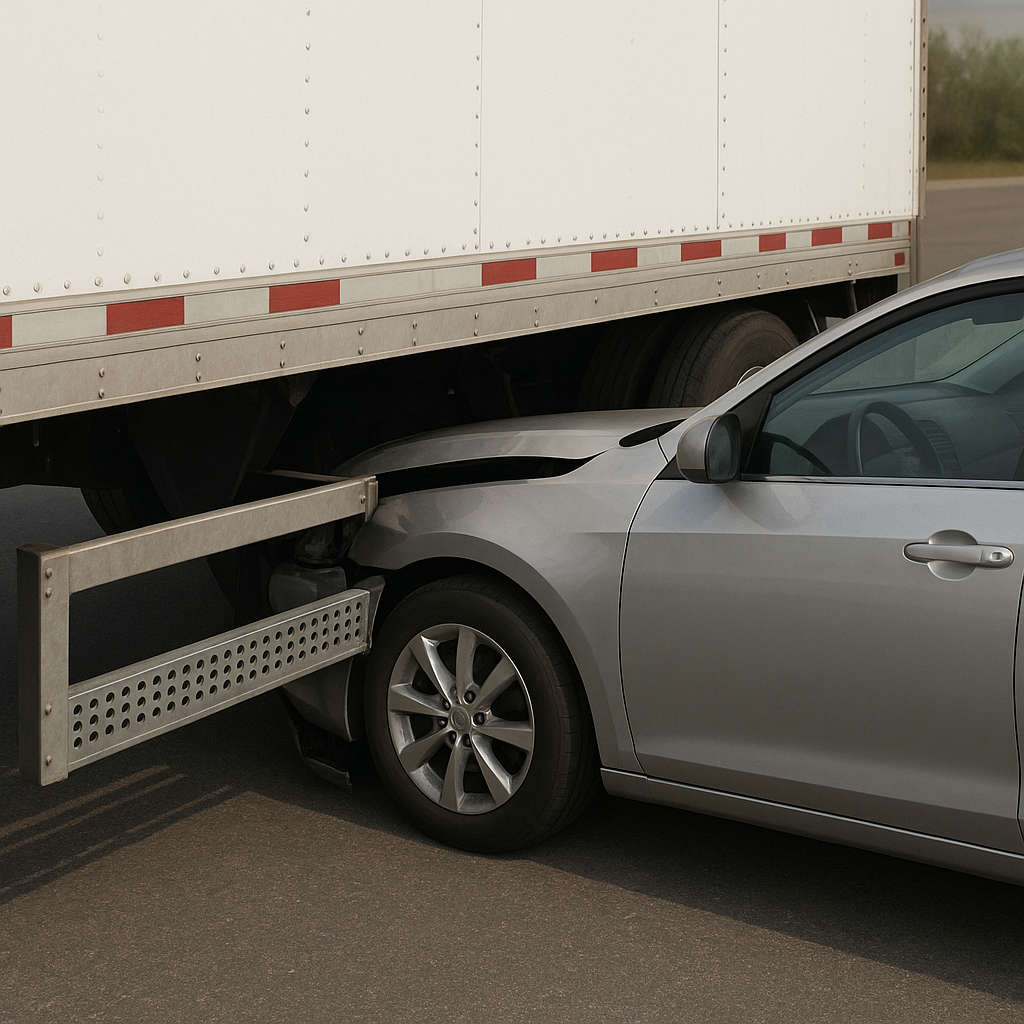
Why Underride Guard Standards Matter
In the vast landscape of road safety, one component quietly stands as a barrier between life and tragedy: underride guards. These structural additions to trucks and trailers often go unnoticed by the general public, but their significance becomes heartbreakingly clear in the aftermath of certain collisions. Understanding why underride guard standards matter involves looking at how they function, the mechanisms behind their protective qualities, and their impact in real-world traffic accidents.
The Basics of Underride Guard Systems
What Are Underride Guards?
Underride guards are metal barriers attached to the rear, and sometimes the sides, of large commercial trucks and trailers. Their principal purpose is to prevent smaller vehicles from sliding underneath a truck during a collision. When a car crashes into the back or side of a truck lacking adequate protection, the front of the car can pass beneath the high chassis of the truck, often shearing off the passenger compartment and causing catastrophic injuries.
Standards Define Structure and Performance
The “standards” governing underride guards dictate their design, placement, and strength. Typically set by transportation administrations and regulatory bodies, these specifications address how much force a guard must withstand, how it should be mounted, and the dimensions it should cover relative to the truck’s frame. These details are grounded in years of crash research and engineering, ensuring that underride guards are more than just superficial additions.
Evolution in Guard Technology
Over the years, underride guard requirements have evolved as crash data and vehicle designs change. Early guards were often rudimentary and failed under testing, prompting regulatory agencies to revisit test criteria. Advances in materials engineering and crash-test methodologies have led to the adoption of energy-absorbing structures and improved mounting techniques. Today’s best-performing guards are the result of years of iterative improvements, driven by both legislative mandates and proactive industry initiatives.
How Underride Guard Standards Work
Key Points of Protection
The standards function by ensuring that underride guards actually perform as life-saving barriers in different types of collisions. Engineers test guards in simulated accidents at various speeds and angles, focusing both on low-speed and high-speed impacts. The standards specify not only the minimum force a guard must resist but also the real-world compatibility with common passenger vehicle designs. This includes making sure the guard is low and wide enough to engage with most car bumpers, maximizing chances of stopping a car safely before it slips underneath the truck.
Performance Criteria and Verification
Regulatory standards mandate specific testing protocols, such as having to withstand a certain amount of force in both central and offset impacts. In these standardized tests, guards are mounted according to actual manufacturing methods, providing an accurate simulation of how they would perform in real traffic situations. Only those guards meeting or exceeding the requirements are approved for usage, promoting a market of proven, effective designs.
Side Versus Rear Underride Protection
Historically, much focus was on rear underride protection. However, real-world crashes demonstrated that side underride can be equally deadly. Standards have begun to expand into requirements for side guards, although these are less widespread in some jurisdictions. The technical challenges here are greater, as the impact angles and speed differentials vary more widely, but the underlying mechanisms for performance are dictated by similar safety engineering principles.
The Real-World Impact of Underride Guard Standards
Preventing Catastrophic Outcomes
The effectiveness of underride guard standards is most evident in current data from actual crashes. Studies indicate a significant reduction in fatalities and life-changing injuries when trucks and trailers are equipped with compliant underride guards. In low-speed impacts, strong guards can stop a passenger car from sliding under the trailer altogether, allowing the vehicle’s own safety features to absorb the impact and protect the occupants. In higher-speed collisions, while severe outcomes may still occur, a strong underride guard can dramatically decrease the risk of fatal head injuries by preventing passenger compartment intrusion.
Variations in Outcomes Reflect Engineering Quality
Not all guards perform equally. Incidents involving non-compliant or poorly maintained guards often result in devastating results, demonstrating the importance of consistent adherence to the highest standards. Conversely, trucks equipped with guards meeting or exceeding modern standards often show substantial mitigation of damage to impacting vehicles. The result is not simply a matter of minor versus major injury but quite often the difference between survivable and non-survivable crashes.
Broader Safety Implications
The presence and quality of underride guard standards influence not just individual crash outcomes but also broader transportation safety strategies. Regulators use data from underride-related collisions to continually refine standards, aiming to protect a wider range of vehicle types and address newly identified risk scenarios. This creates a dynamic system where vehicle safety evolves in response to both real-world experience and advances in understanding crash mechanics.
Standards in Context: A Thoughtful Close
Underride guard standards occupy a critical, if often unnoticed, role in road safety infrastructure. Their existence is a direct response to the realities of mixed-vehicle traffic and the vulnerabilities of passenger vehicles compared with the high ground clearance of commercial trucks. Through rigorous engineering and continual refinement, these standards seek to turn structural barriers into essential life-saving devices.
While the details of underride guard regulations may seem technical, the impetus behind them—protecting lives in the event of a crash—remains a powerful motivator for ongoing improvement. As vehicle technology and road use patterns continue to change, the evolution of underride guard standards will remain a focal point for those working to mitigate the most severe consequences of road traffic incidents. In the silent assurance provided by a well-designed guard, the broader mission of transportation safety quietly asserts its presence, one regulation at a time.